 English
  Español
 Articles highlighted in Letters from the Director, Jo Anne Van Tilburg:
Phase 2 Season 2
Easter Island Statue Project
March 16 – April 14, 2014
Dr. Jo Anne Van Tilburg, UCLA Project Director
Cristián Arévalo Pakarati/ Rapa Nui Project Co-director
José Miguel Ramírez A., Universidad de Valparaiso, Co-investigator
Introduction
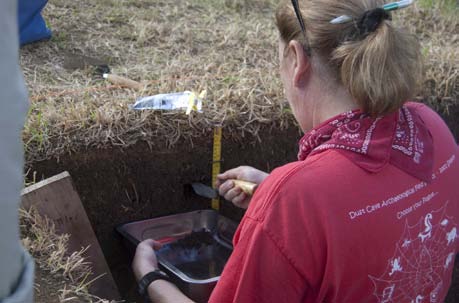
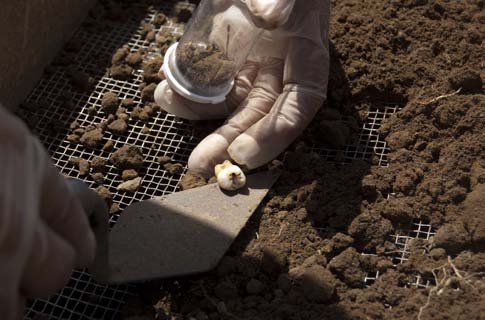
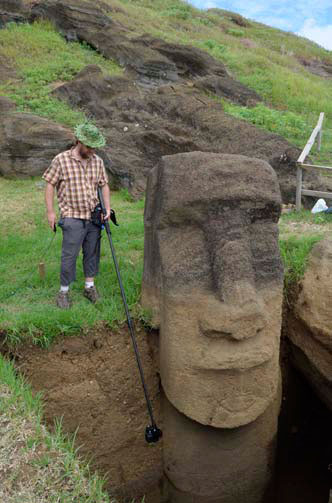
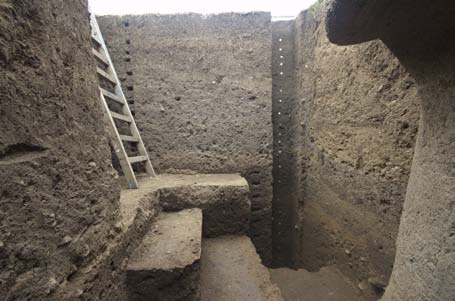
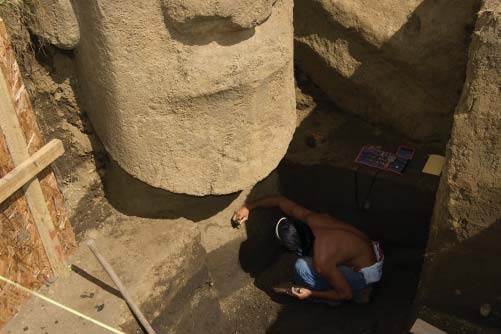
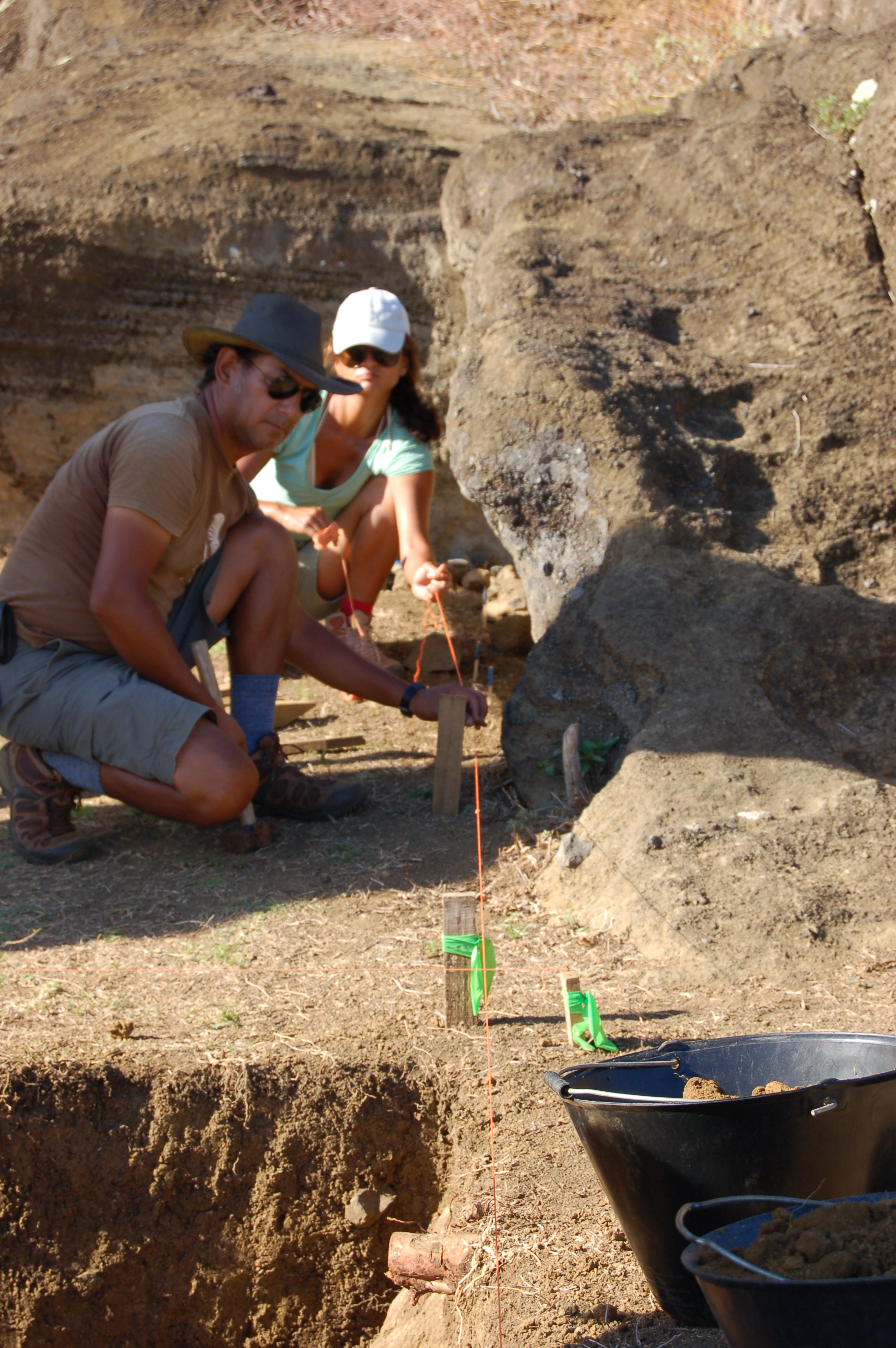
This report is prepared as part of a numbered series that describes the excavations conducted by the Easter Island Statue Project in Rano Raraku Quarry Zone, Interior Region, Quarry 02, Statues RR-001-156 and RR-001-157. The team is composed of an all-Rapanui excavation staff directed by the project Co-directors. With the completion of the conservation and scientific investigations conducted by our Chilean collaborator, Monica Bahamondez P, and our UCLA collaborator Dr. Christian Fischer, we were joined this season by our new Chilean collaborator Sr. José Miguel Ramírez A., Universidad de Valparaíso. Our research agreement is contained in a Memo of Understanding between the Universidad de Valparaíso and the Cotsen Institute of Archaeology at UCLA. This report summarizes our collections and investigations for the period beginning Monday, March 10 and ending Monday, March 14, 2014. This report is part of a preliminary final report that includes some but not all of our in-process laboratory test results and collections analyses, as per our permit CMN ORD 5467-09. A final report will be published in 2015-2016 by the The Cotsen Institute of Archaeology Press.
Phase 2 Season 1
Easter Island Statue Project Phase 2, Season 1
August 2013
Jo Anne Van Tilburg and Cristián Arévalo P.
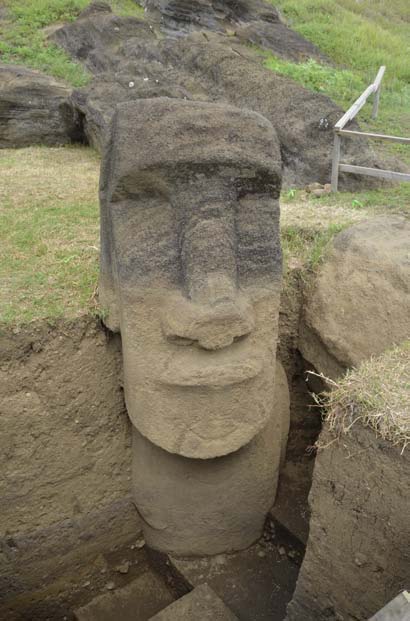
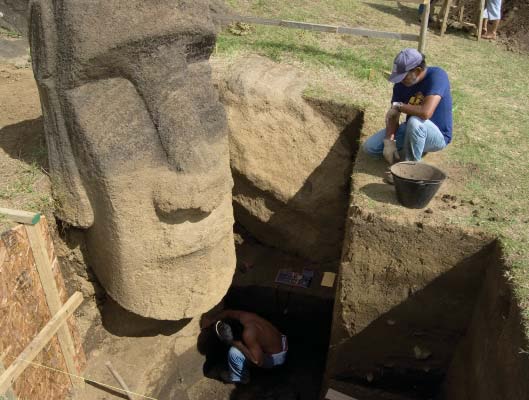
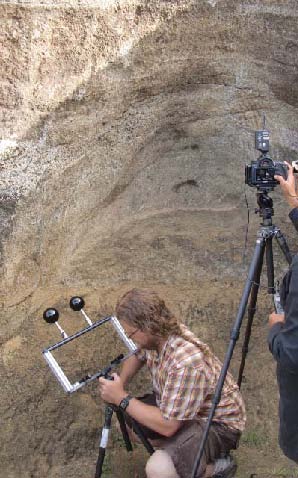
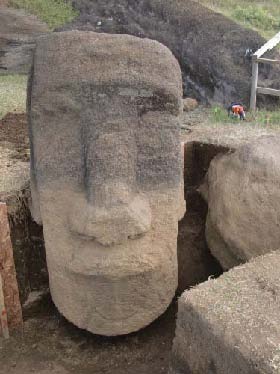
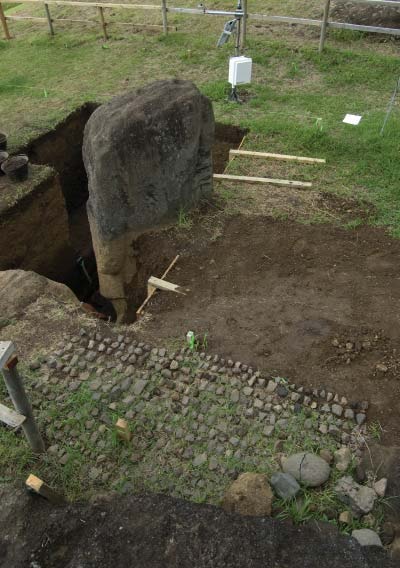
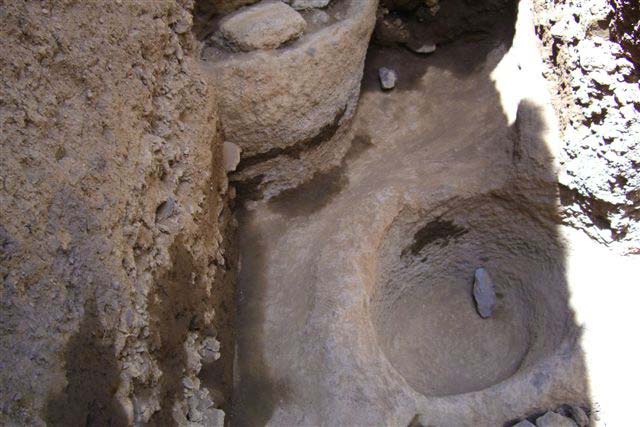
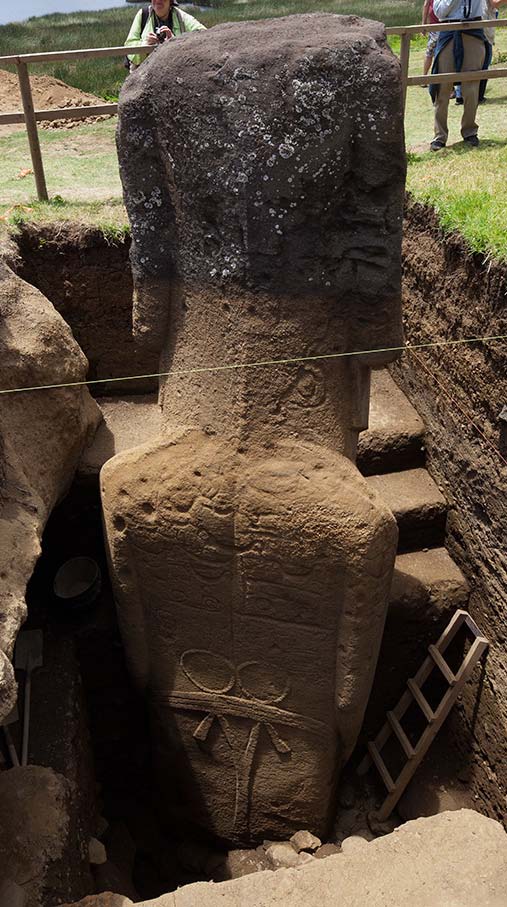
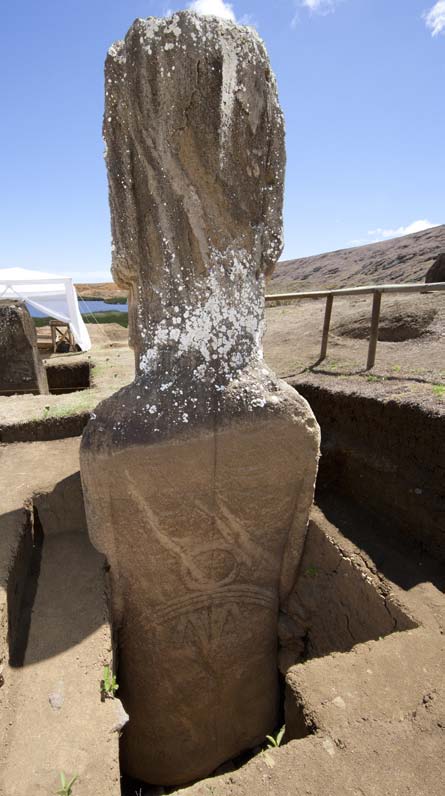
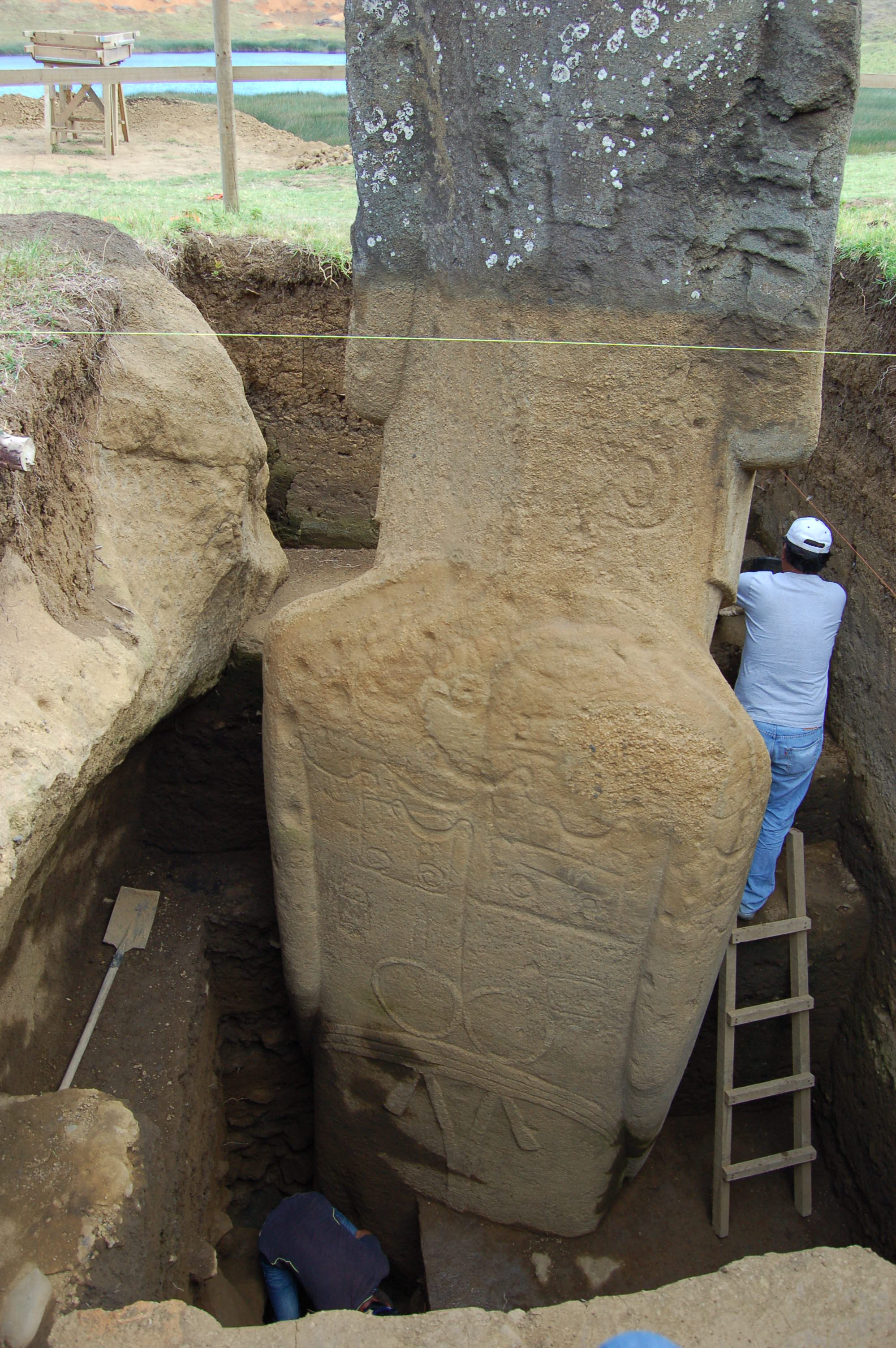
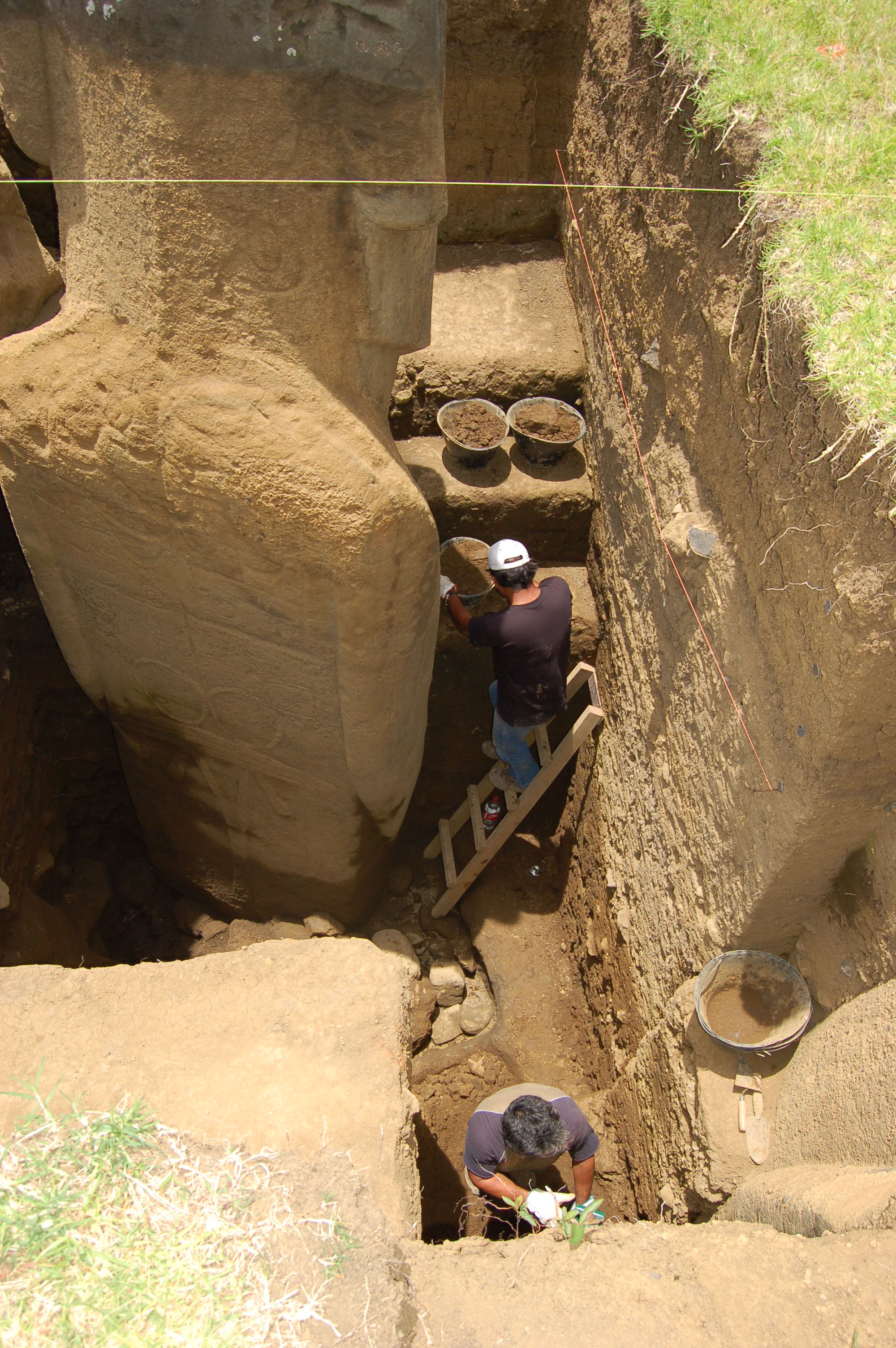
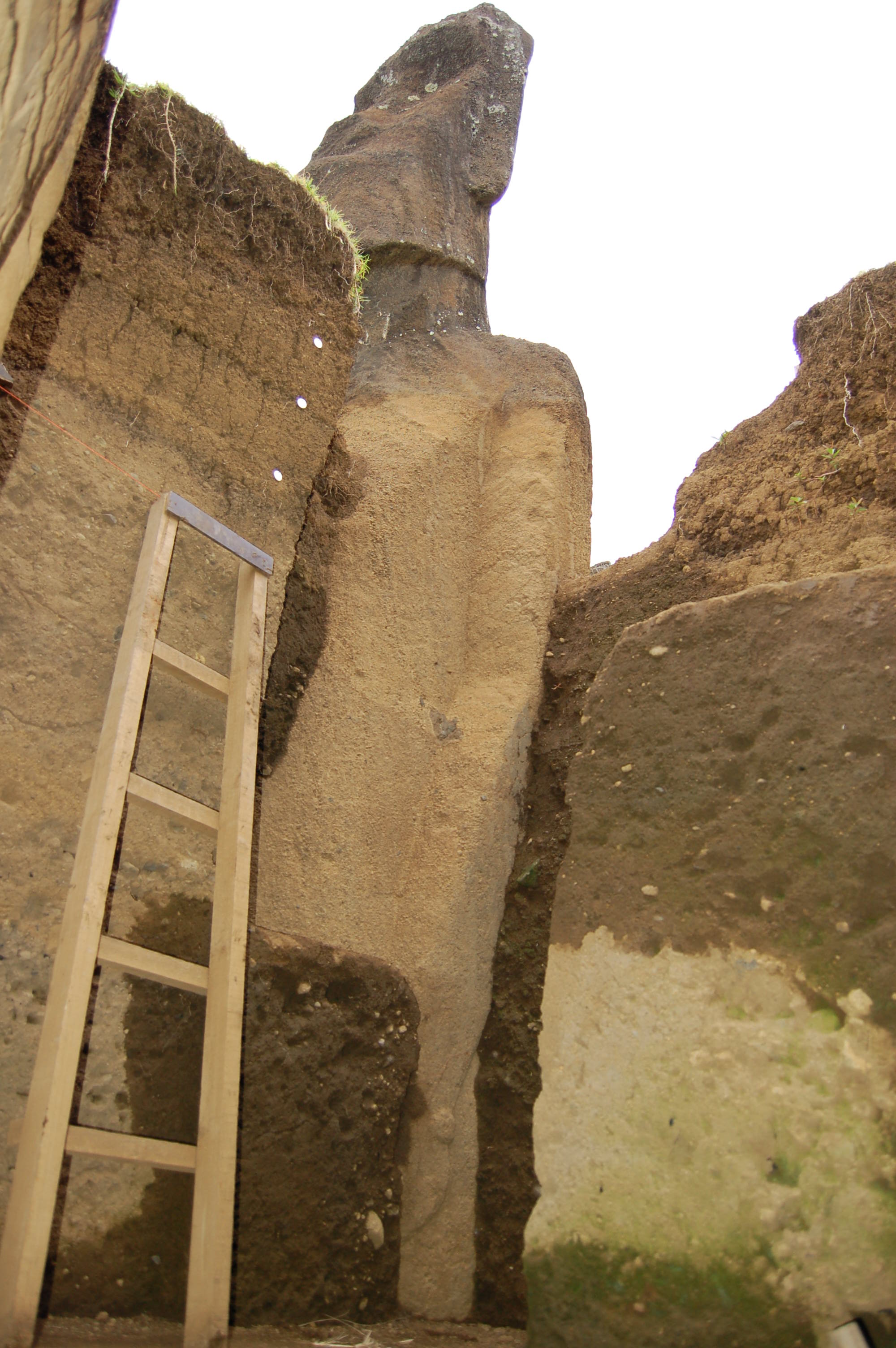
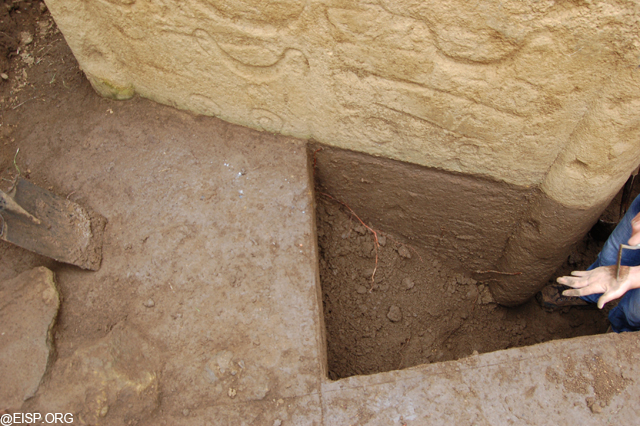
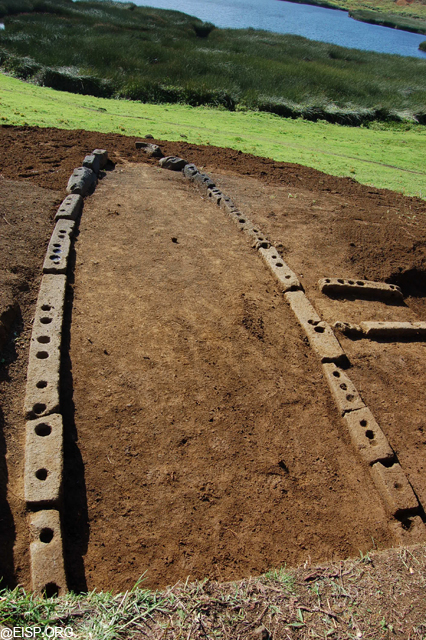
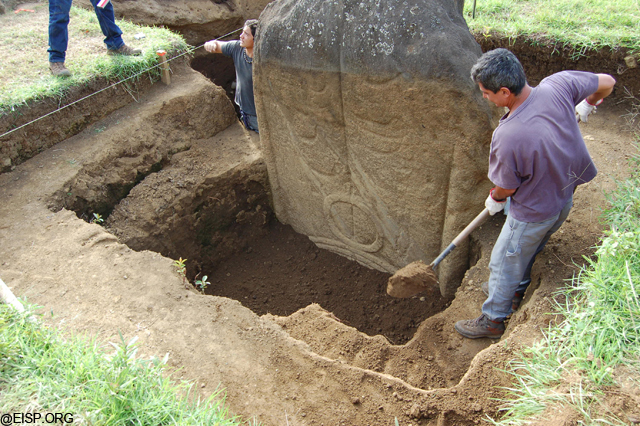
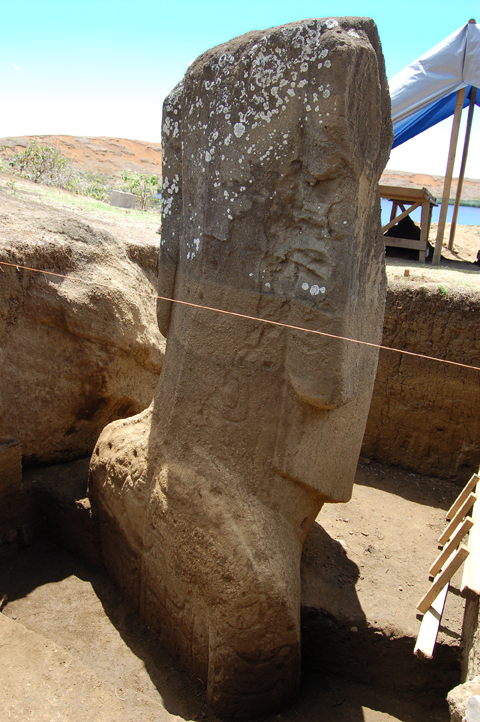
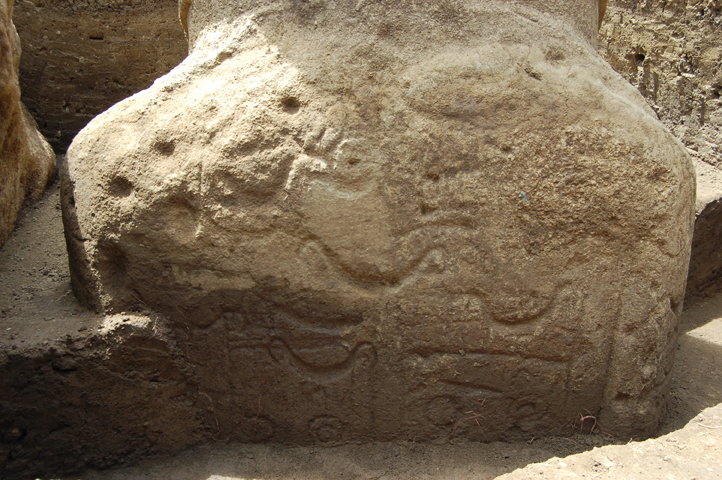
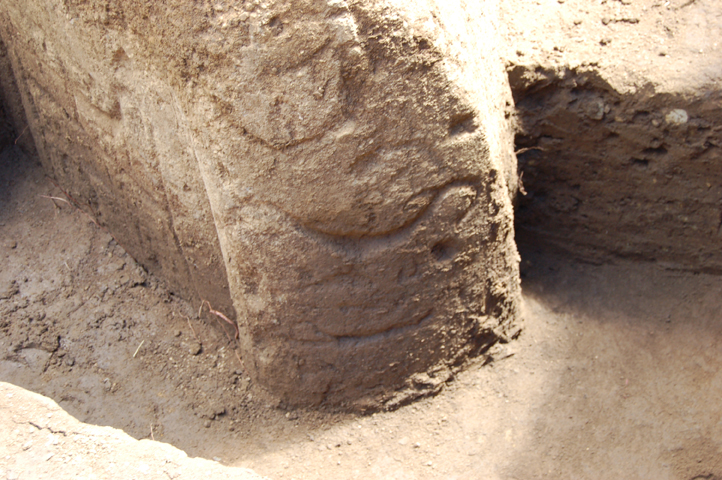
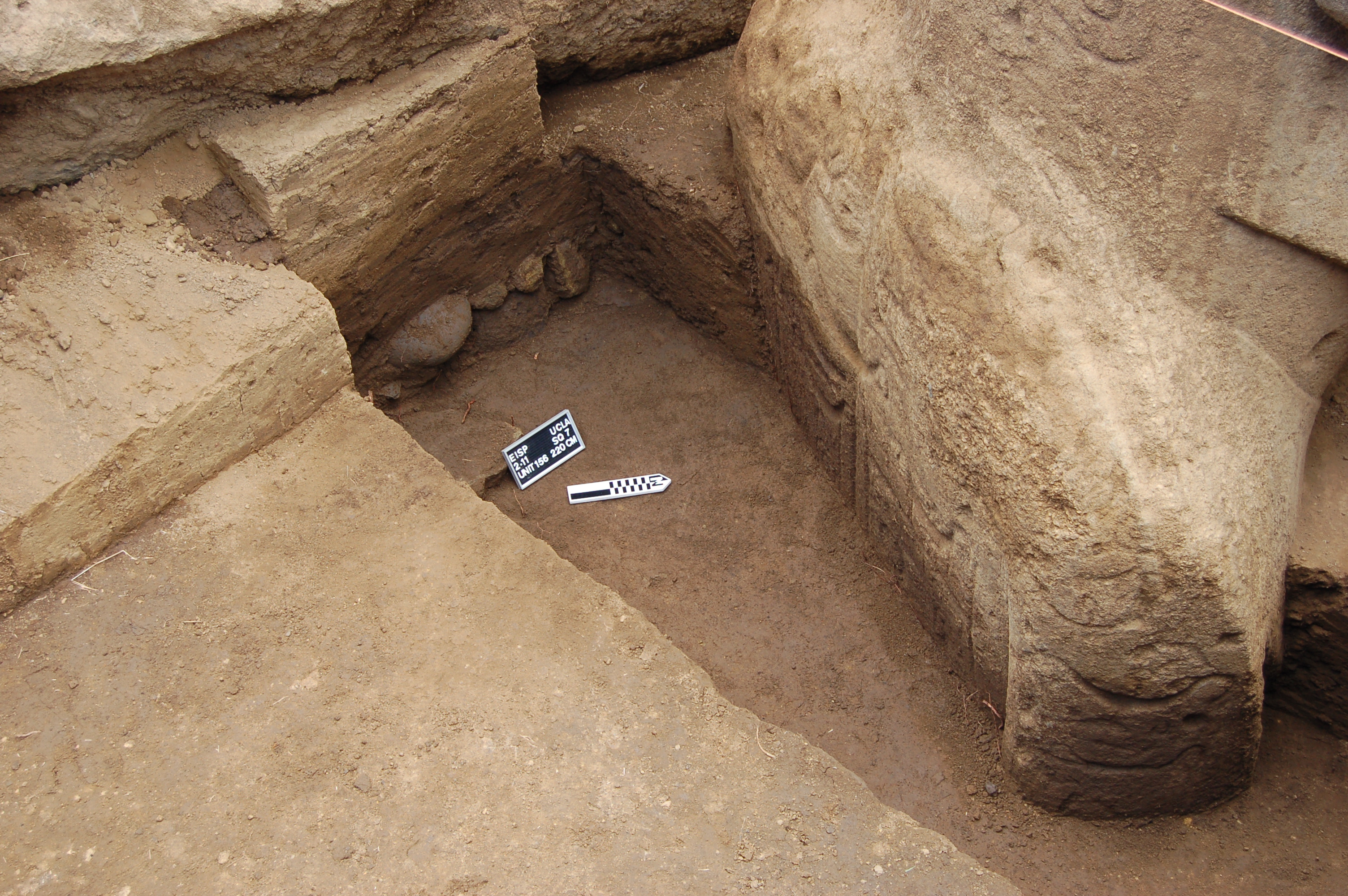
This report describes recent excavations beginning Phase 2 of the project and concentrating on the ventral side of Moai RR-001-156. These excavations are a continuation of limited excavations conducted on the ventral side during Phase 1, which focused on reaching the base of the statue on the dorsal side. The excavation season commenced on August 6, 2013 and actual excavation ended on August 29, 2013. The excavation was subsequently closed to protect it from heavy rains and with the help of personnel from CONAF and CMN.
Phase 1 Season 6
Easter Island Statue Project (EISP) Conservation Initiative
March 2012
Jo Anne Van Tilburg and Cristián Arévalo Pakarati have accomplished an archaeological survey and inventory of the monolithic stone sculpture (moai) of Rapa Nui. To date, we have accounted for 1,300 monolithic sculptural objects within the island-wide survey sections, in museum collections, and within the Rano Raraku quarry zone, including complete (as opposed to intact) statues, heads, torsos, fragments, shaped block. The latter are considered to be evidence of human activity in the form of incomplete or abandoned projects elucidating energy investment. The most recent object entered into our collaborative on-line database (DATASHARE) is a red stone torso submitted by Enrique Tucki M. of the Oficina Provincial, the Corporación Nacional Forestal (CONAF).
Phase 1 Season 5
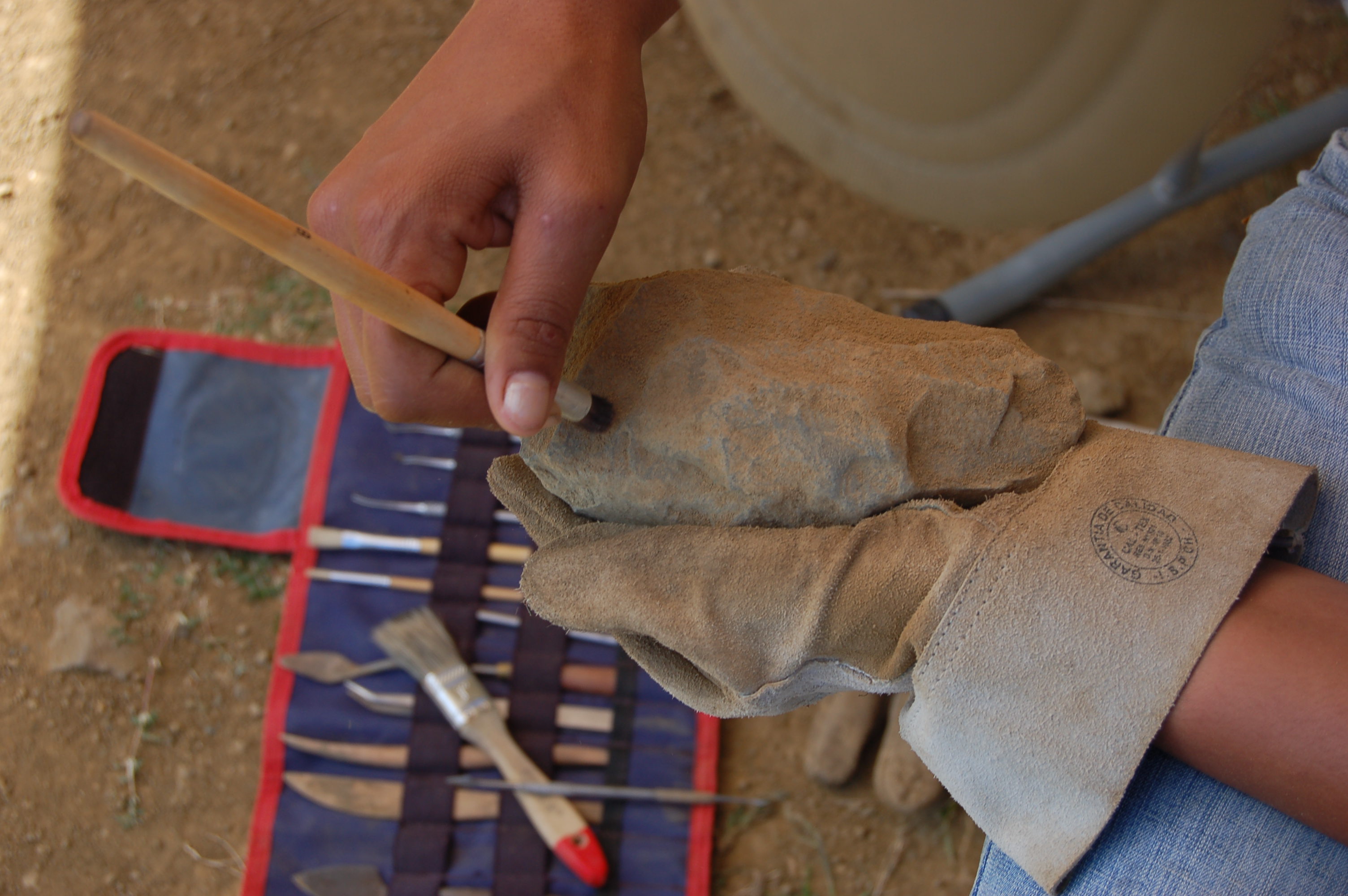
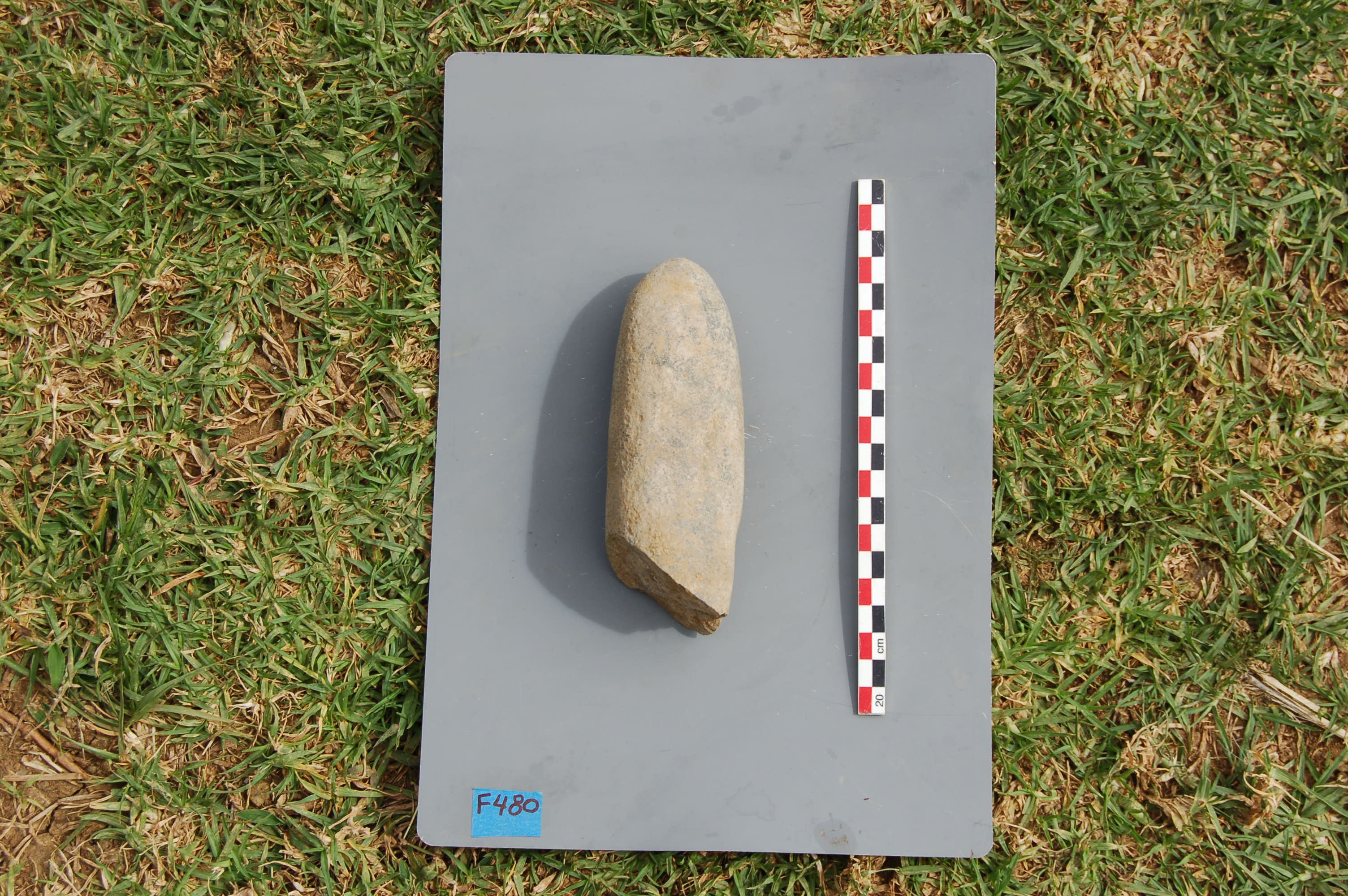
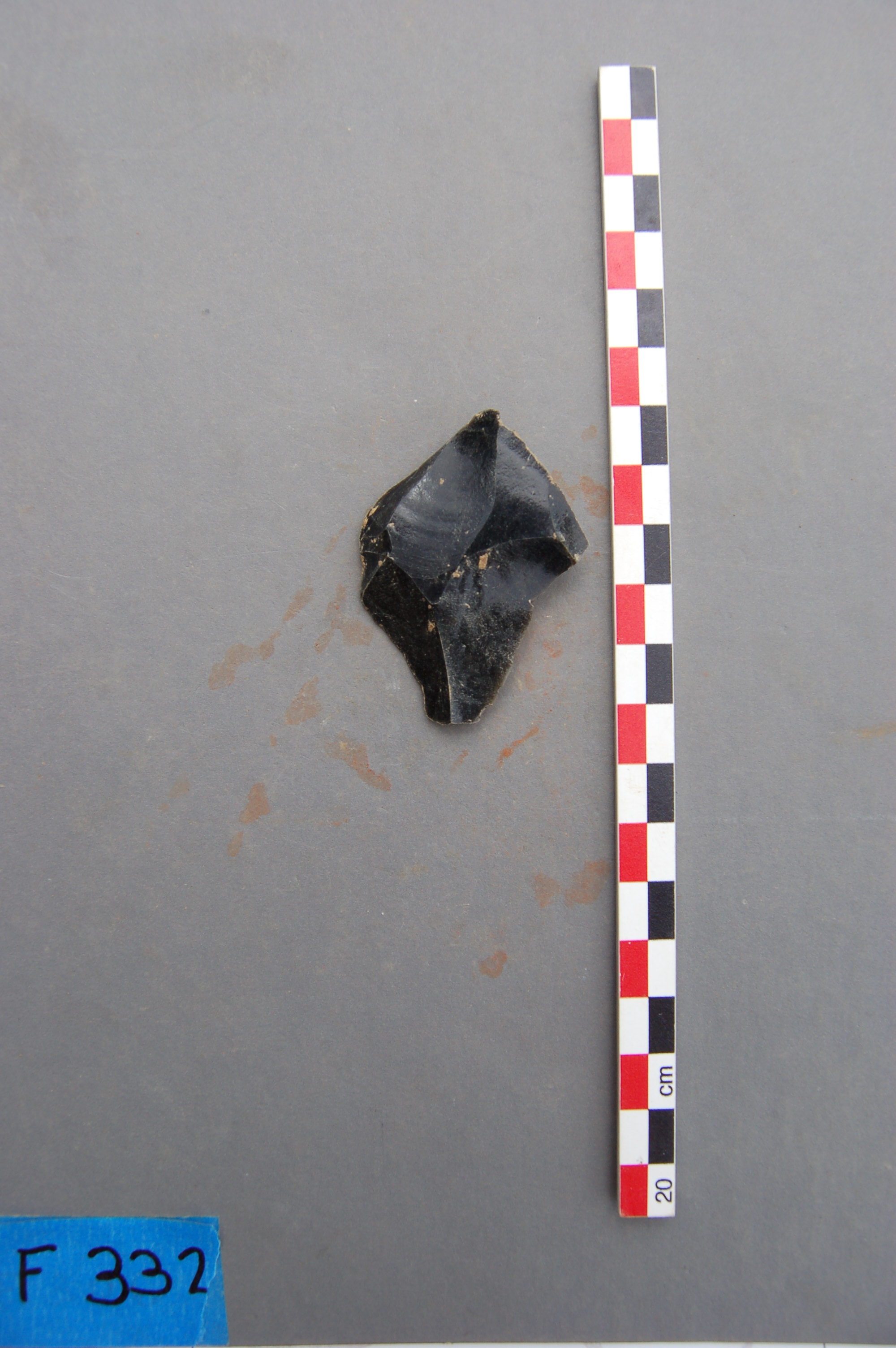
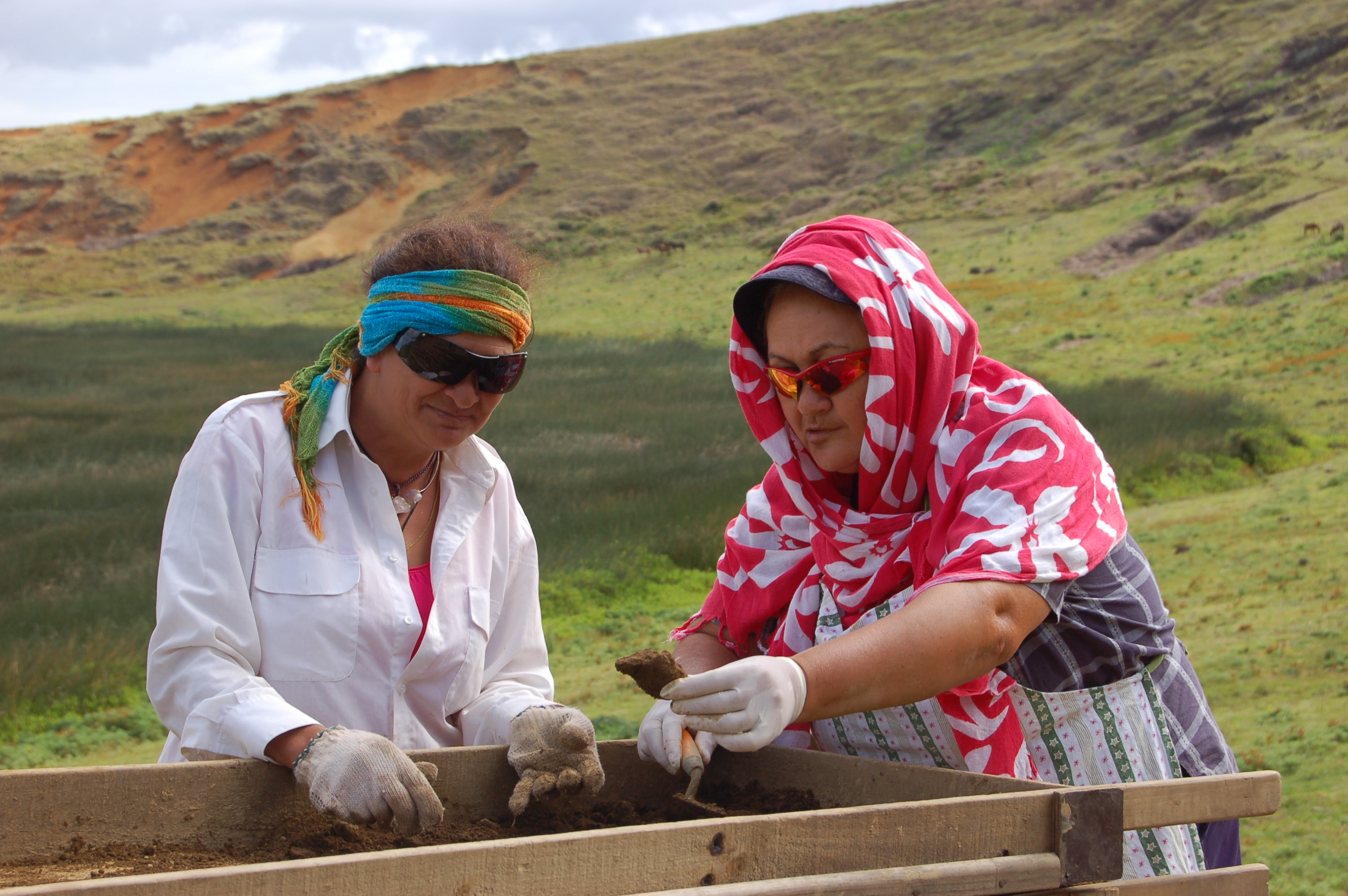

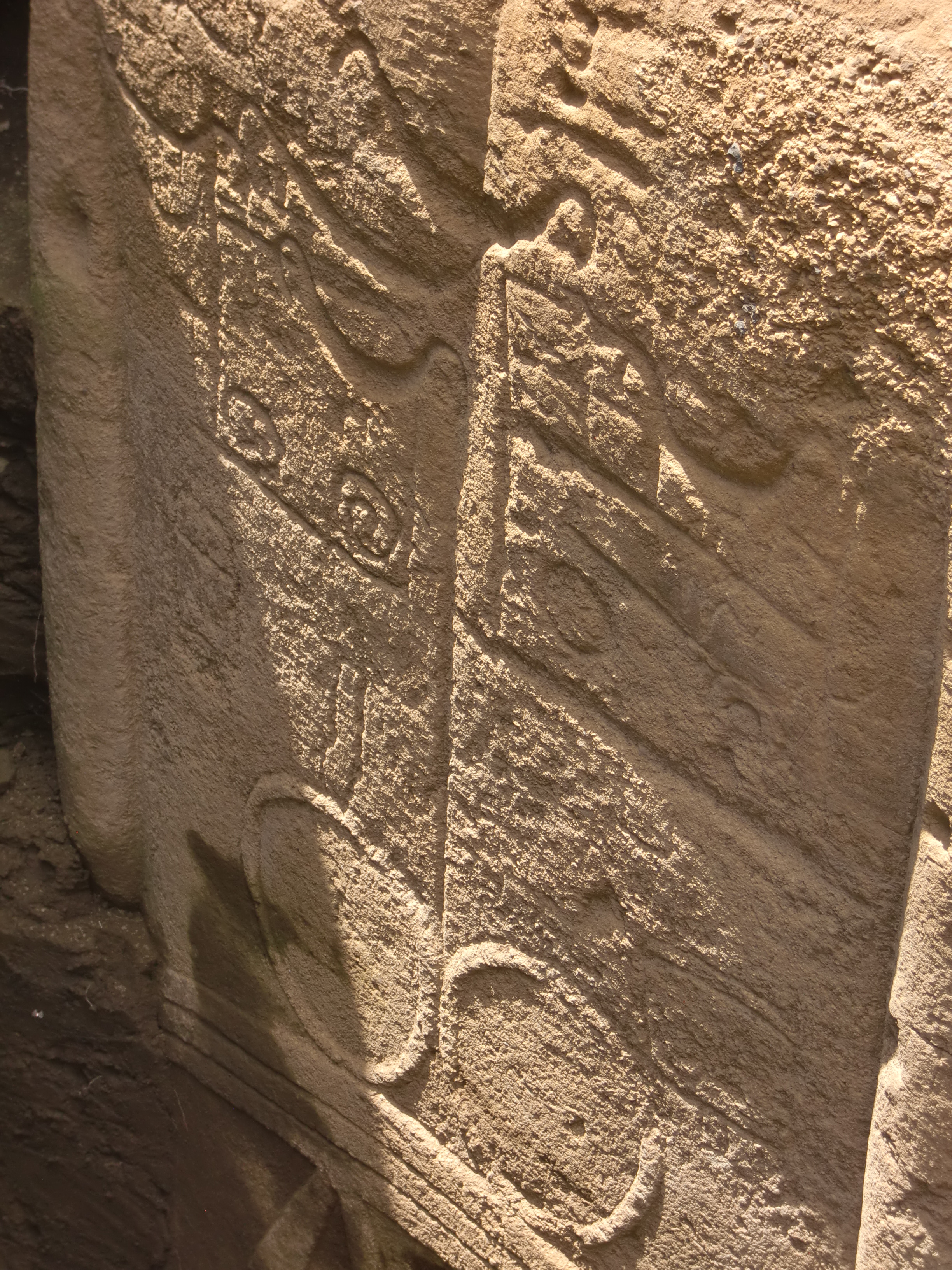
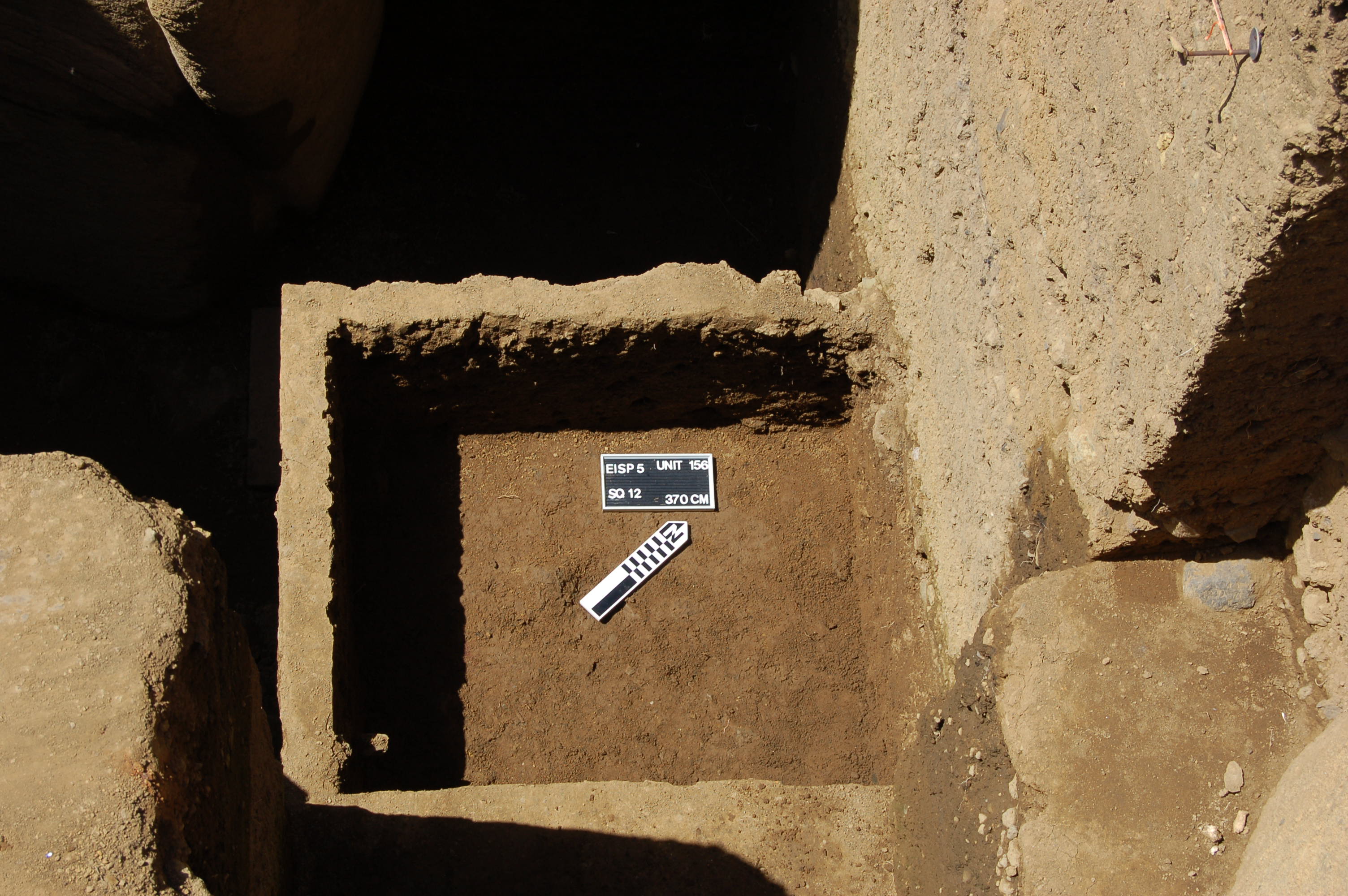
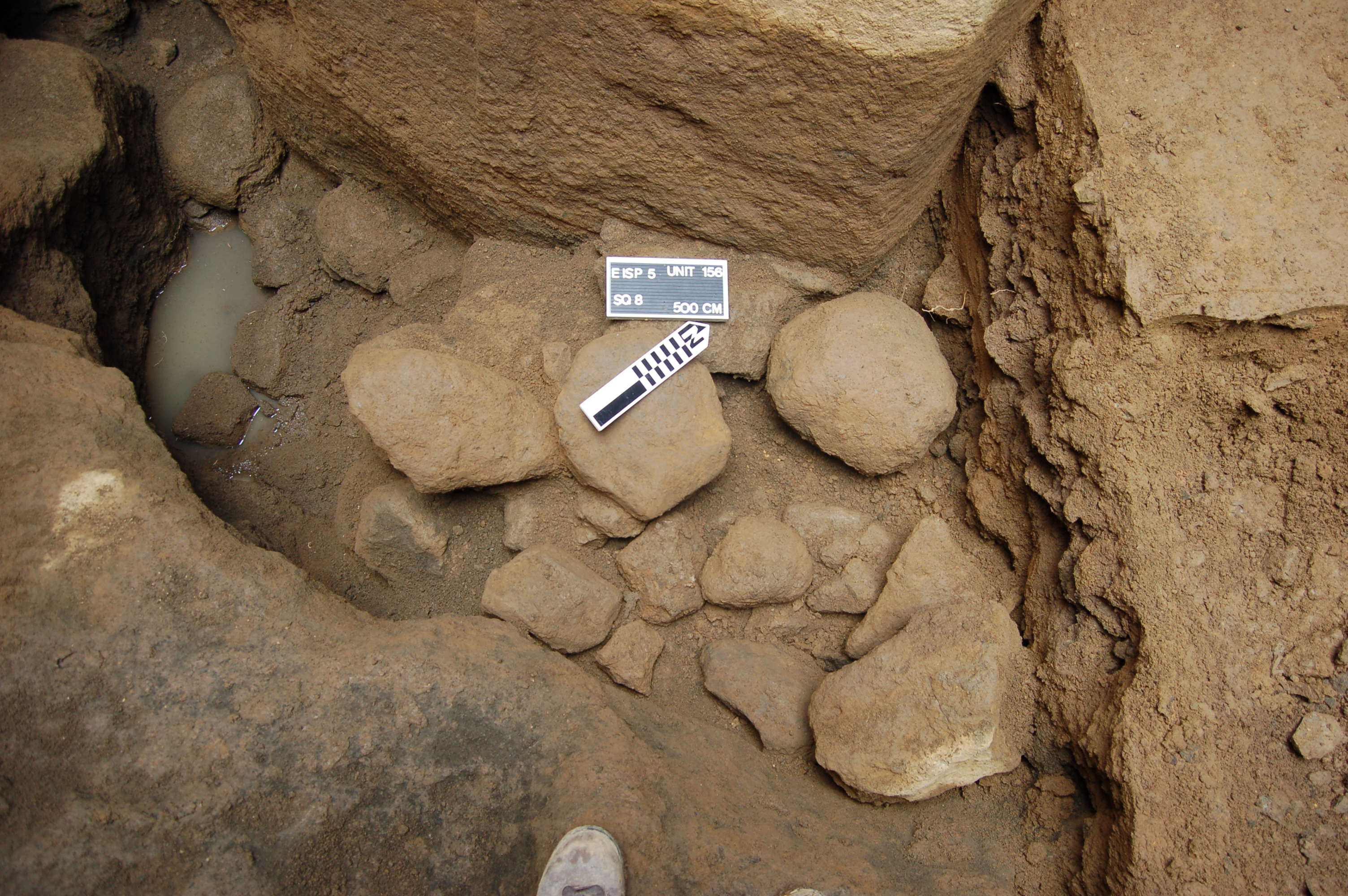
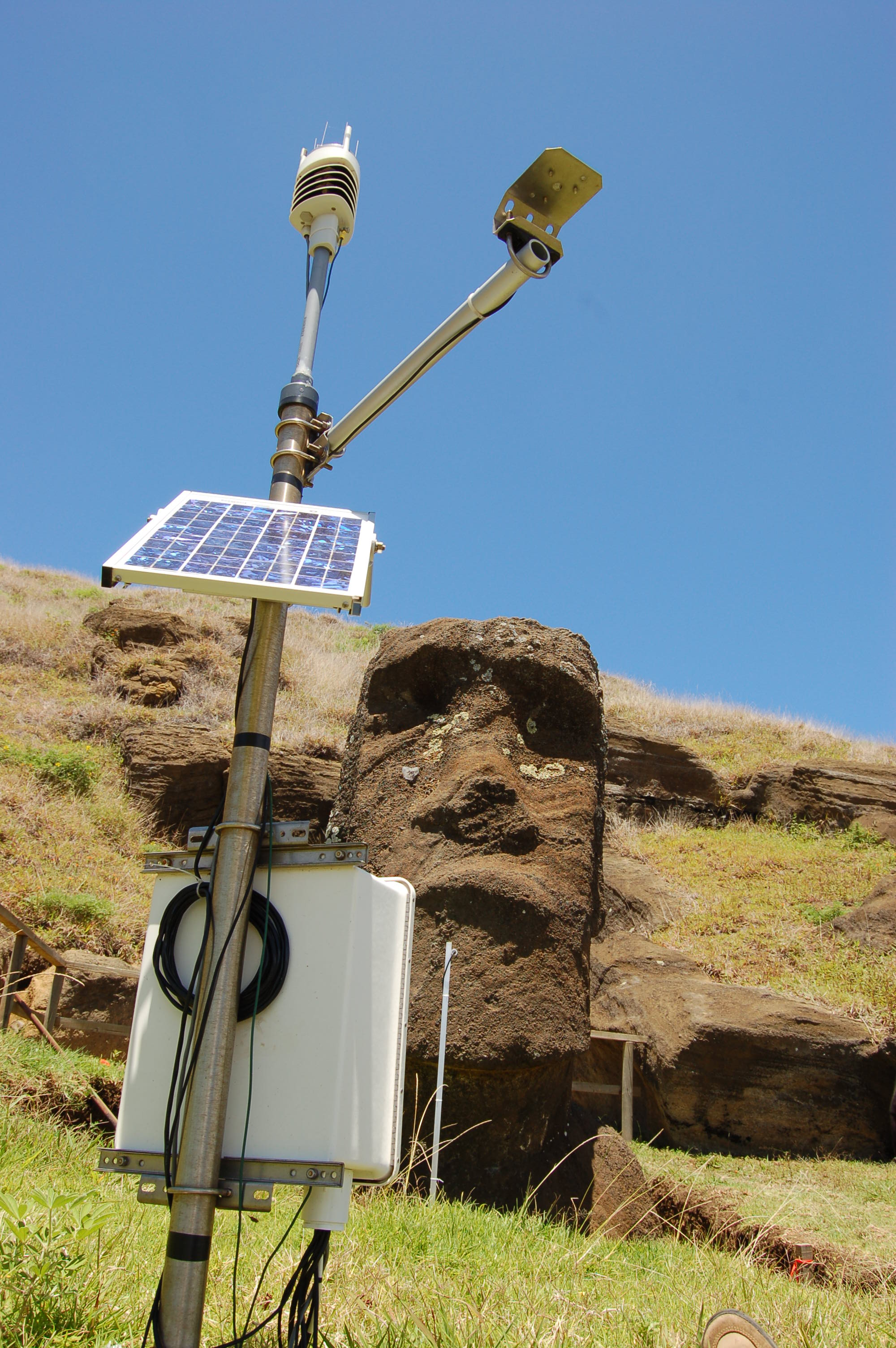
Easter Island Statue Project Conservation Initiative
Season V Excavation Summary
RR-001-156 and Square 4, RR-001-157
Jo Anne Van Tilburg
November 2011
Introduction
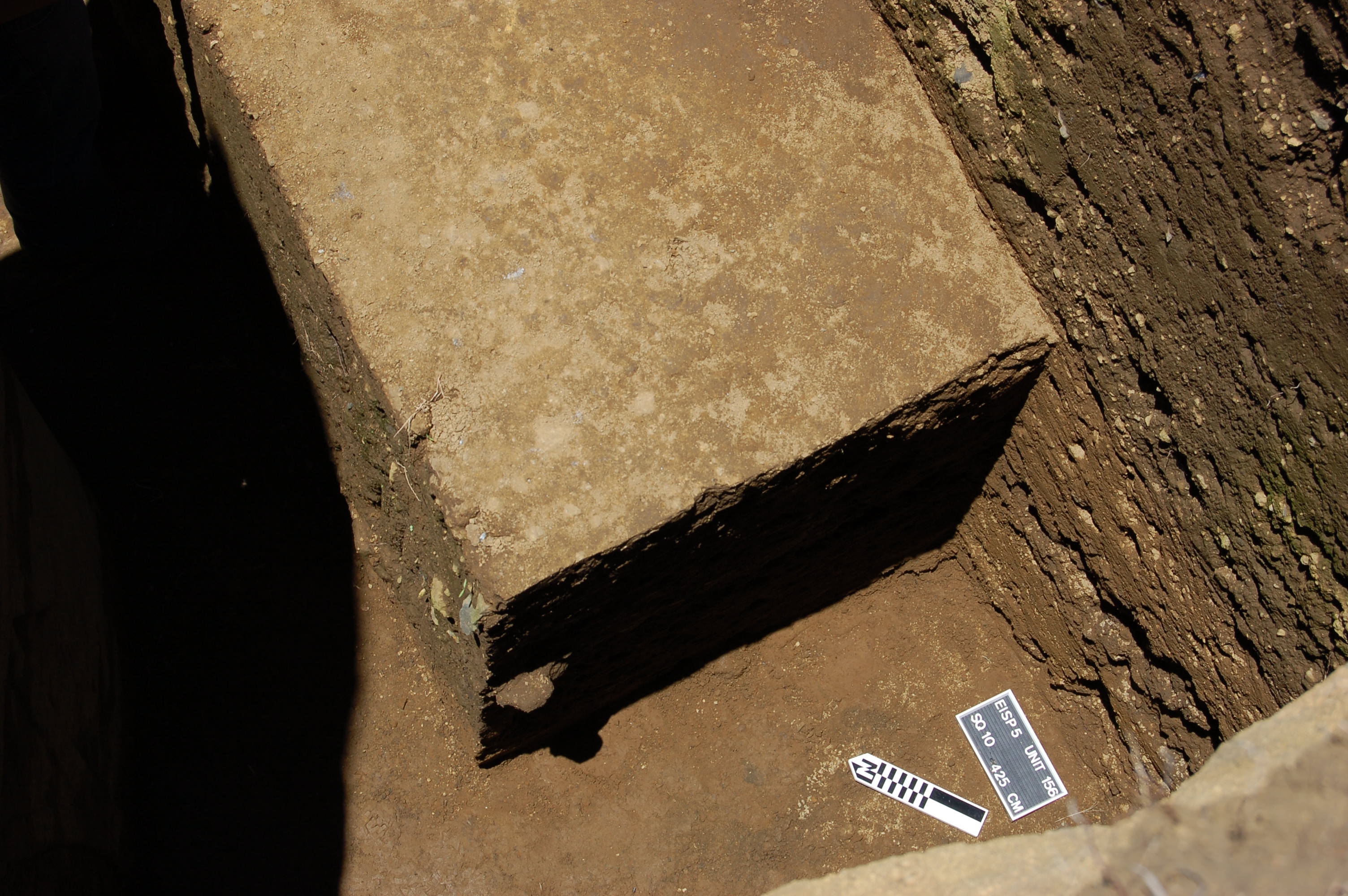
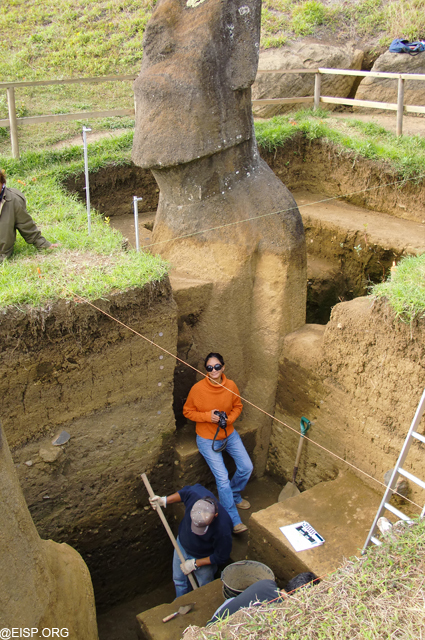
This report is another in a series of reports dealing with the excavation of statues RR-001-156 and RR-001-157 in Rano Raraku quarry, Rapa Nui, Chile. The previous reports were filed with the appropriate Chilean and Rapa Nui agencies and also provided to the general public on the Easter Island Statue Project web site (www.eisp.org). This report deals with the continuing excavation of statue RR-001-156 to the base and Square 4 of RR-001-157. These activities took place during Season V (November 2011) of the Easter Island Statue Project Conservation Initiative.
[Read More…]
Phase 1 Season 4
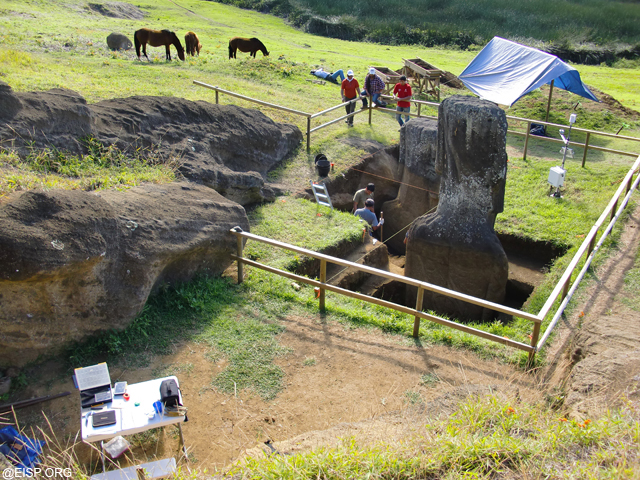
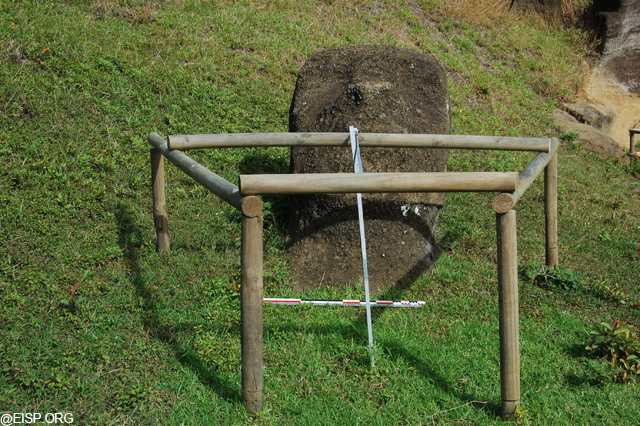
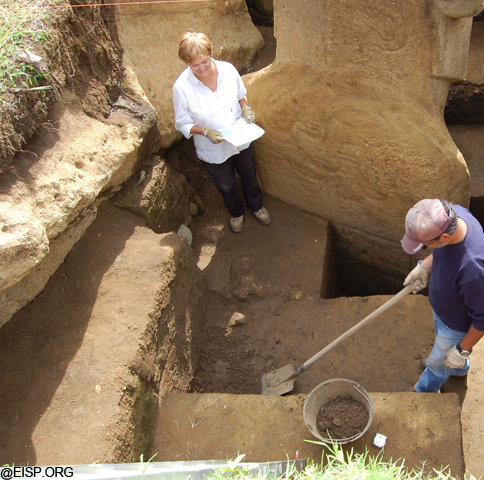
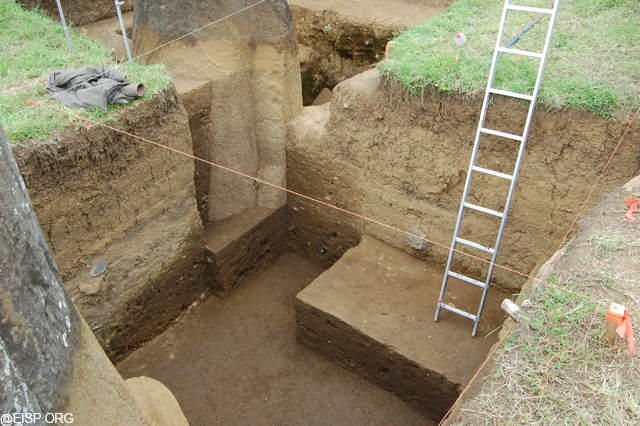
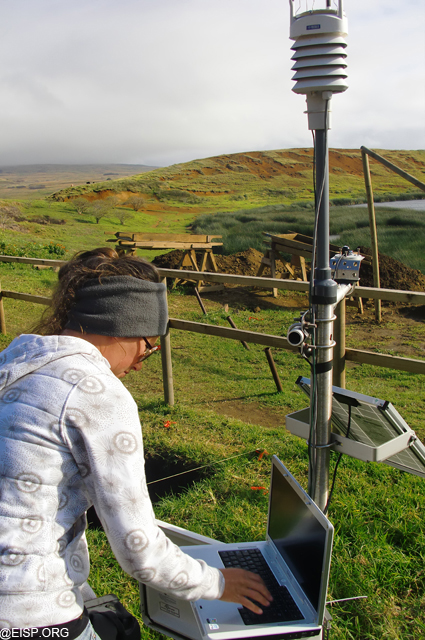
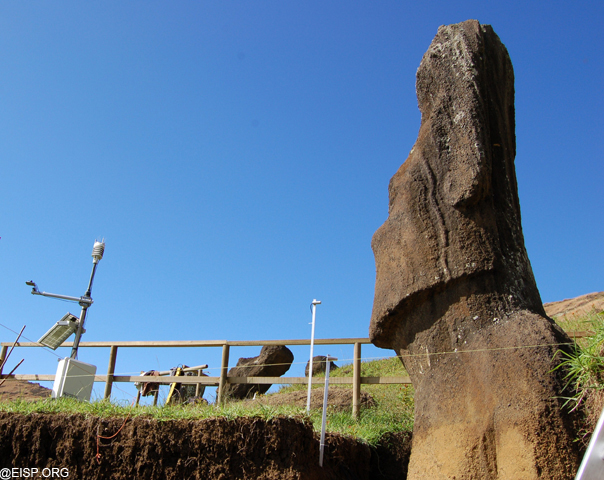
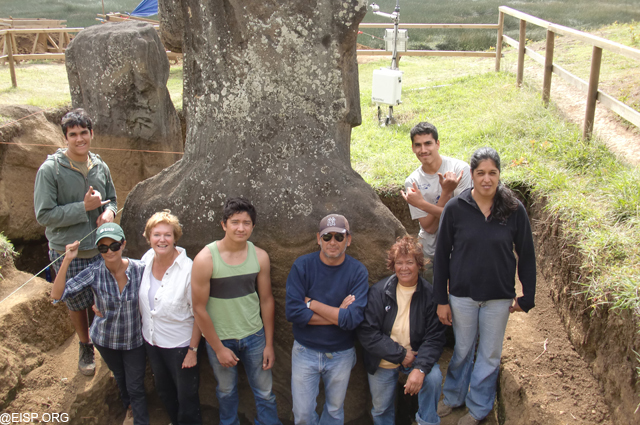

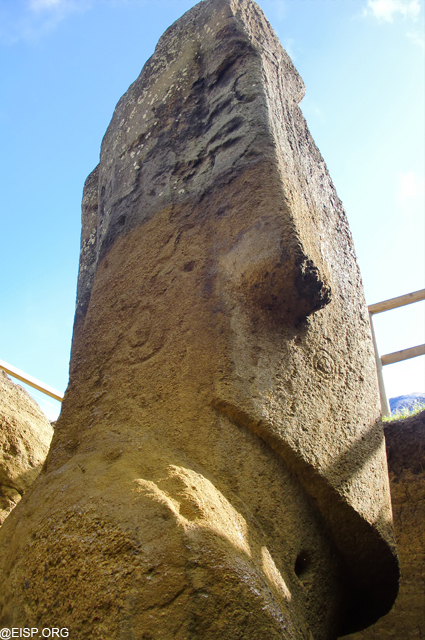
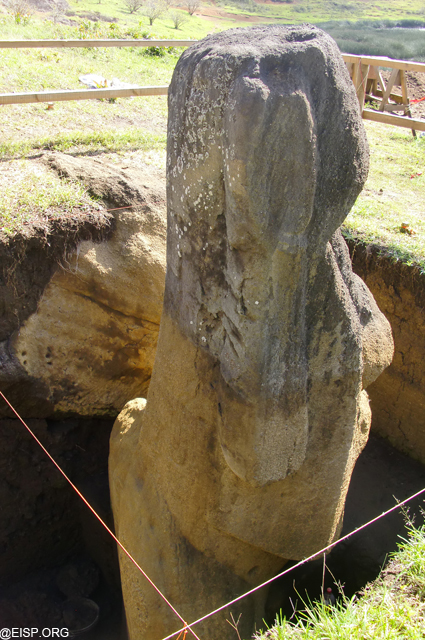
Easter Island Statue Project Conservation Initiative Preliminary Report
July-August 2011
Project Target Statues
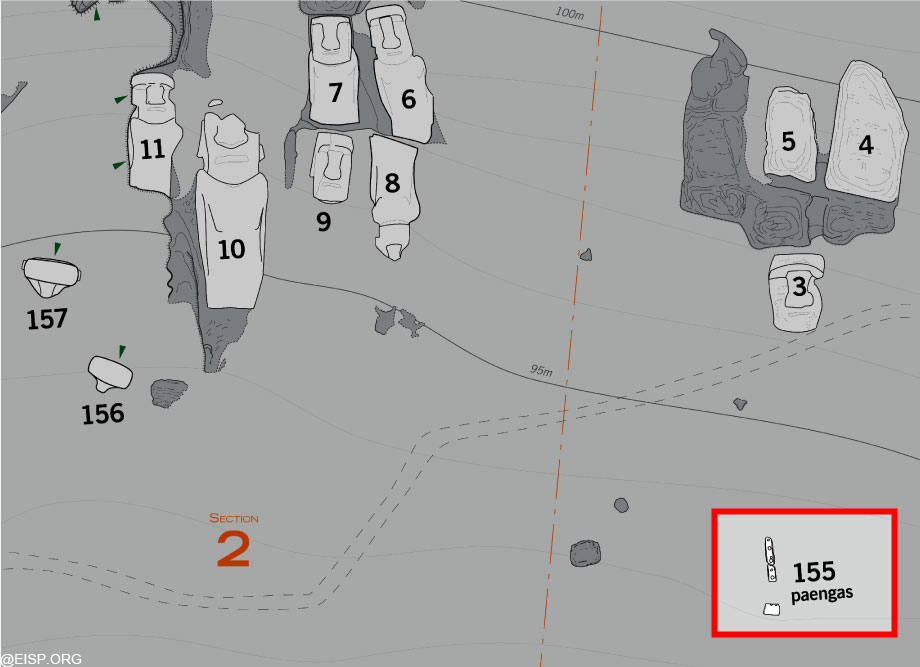
The target statues from the inception of this project are RR-001-156 and RR-001-157, both of which are located within Quarry 2 of Rano Raraku. RR-001-158 is adjacent to Quarry 2 on the eastward side and was selected by the conservators as a study control. All of these designations are given on EISP Map Sheet 1 (Van Tilburg and Arévalo Pakarati 2009). Rano Raraku, the quarry in which fully 95% of the known 1,042 monolithic sculptural objects documented to date by this project were carved, is a unit of the Corporación Nacional Forestal (CONAF; www.conaf.cl) and, as such, a World Heritage site.
Phase 1 Season 3
Easter Island Statue Project Conservation Initiative Preliminary Report
February 2011
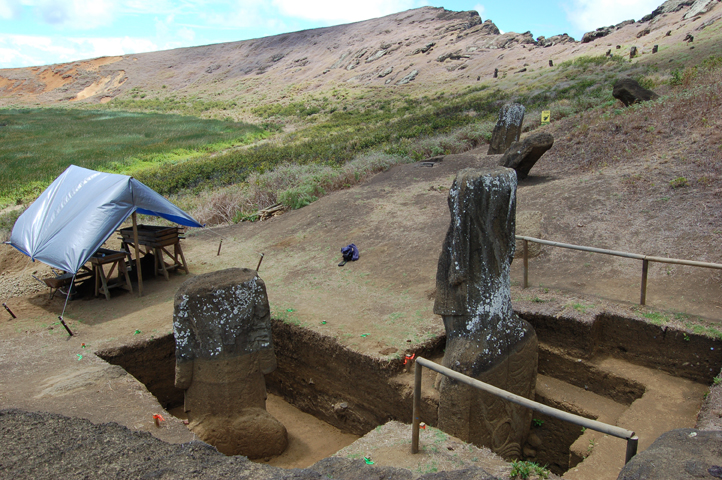
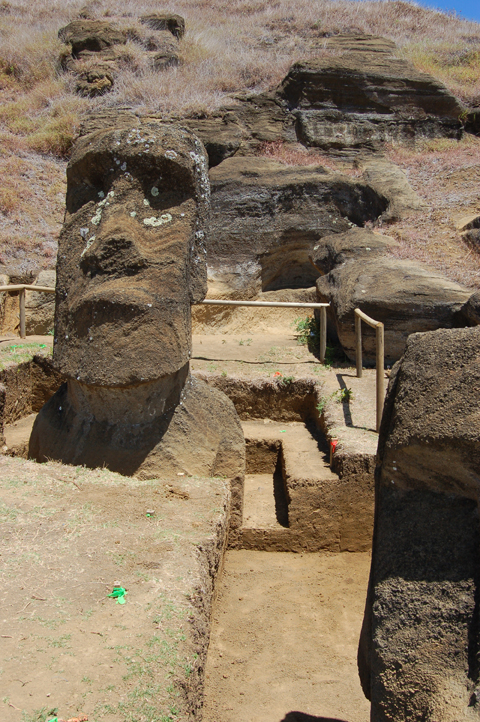
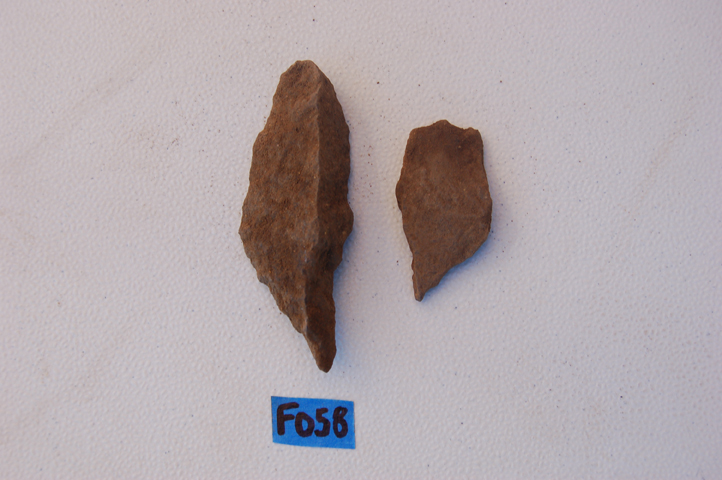
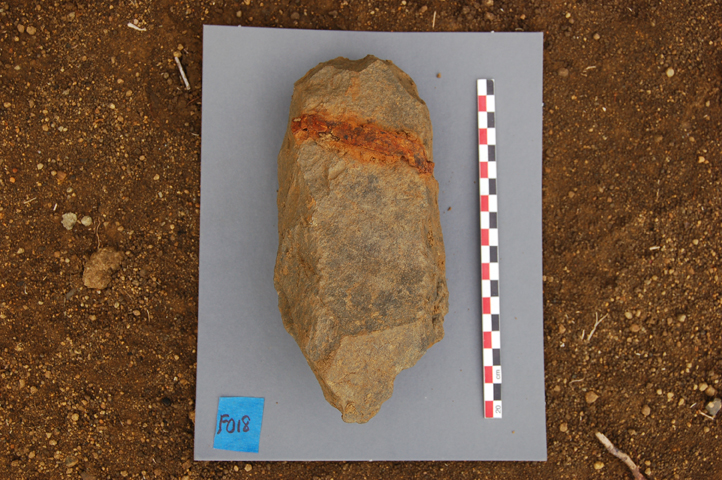
Introduction
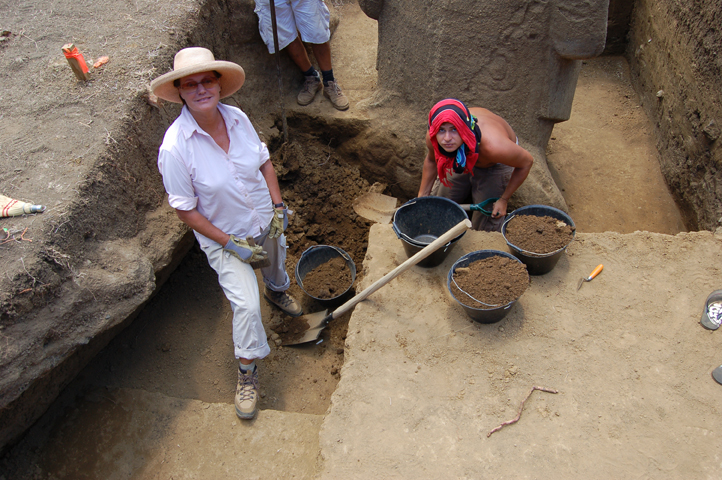
This report is the third in a series documenting the implementation of permitted excavations in Rano Raraku quarry on target statues RR-001-156 and RR-001-157 . Specifically, this report deals with the third excavation season, or Phase 3, and is focused specifically on RR-001-156. The conservation follow-up work that is anticipated for March, 2011 will be conducted by Dr. Christian Fischer and documented by him in a separate report.
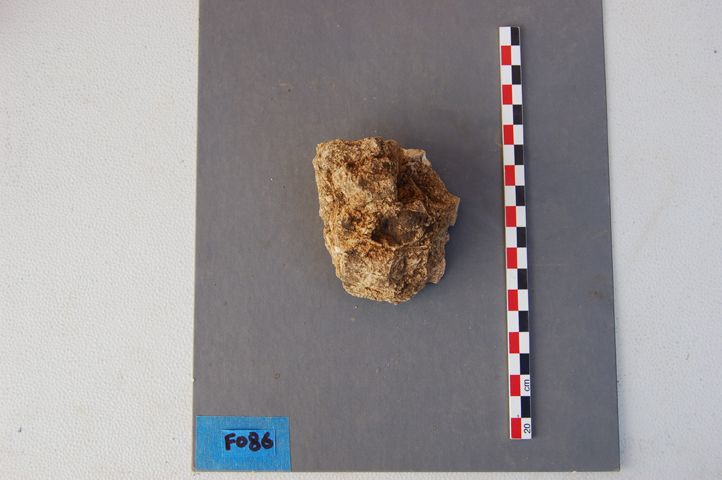
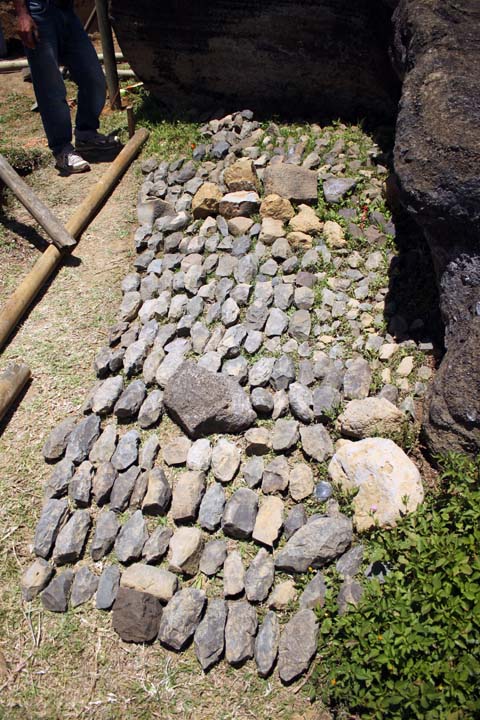
The target statue for this season is RR-001-156. It was previously excavated by the Mana Expedition to Easter Island in 1914-15 (Routledge 1919). According to Routledge’s unpublished notes, “at the start, the statue was buried to a line midway between the lobe of the ear and the angle of the jaw” (NGS/WKR). Two separate excavations, both of which were haphazard and are poorly documented, were made of the dorsal side of the statue. The first excavation reached “to a depth of 16 feet measuring from the crown of the head.” The second excavation at the back was made “to extend the first excavation to 10 feet from the statue back” simply to take photographs. At the front, excavation reached “to the navel.” Our Historic Level Book provides a synopsis of the excavations and the objects collected.
Phase 1 Season 2
Easter Island Statue Project Conservation Initiative Preliminary Report October-November 2010
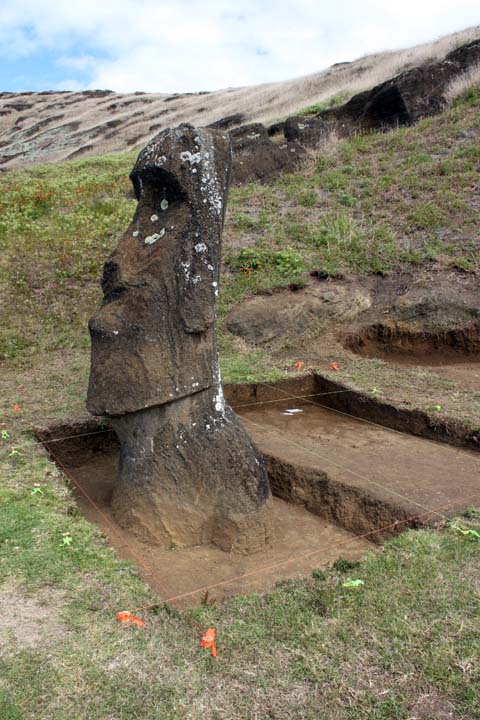
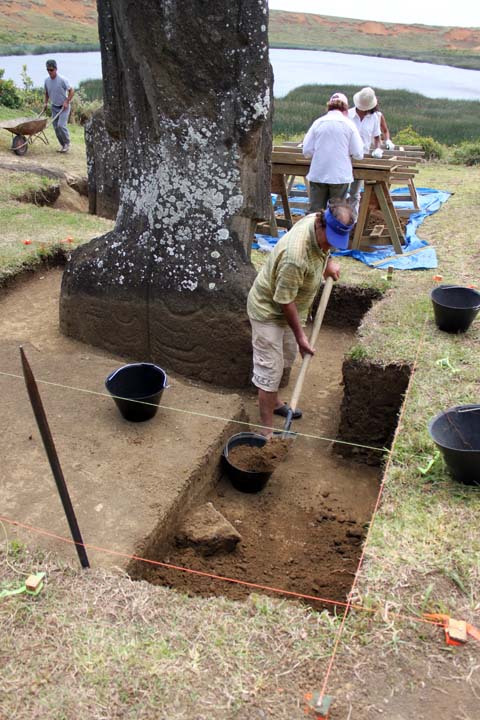
Introduction
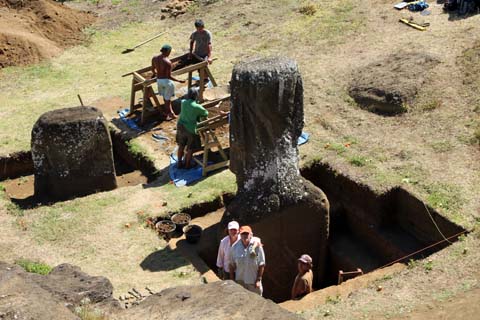
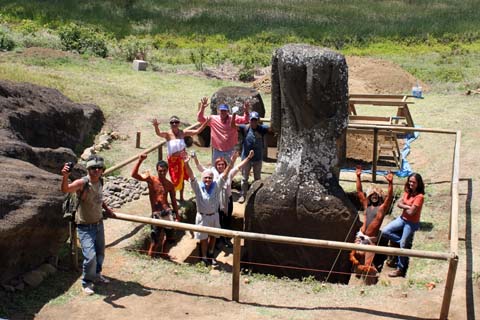
This report is a preliminary statement of the tasks undertaken and goals achieved during the second field season of Phase 2 of the Easter Island Statue Project Conservation Initiative. Phase 1 took place in April, 2010 and a full report of that work is on file with the appropriate agencies. This report is a detailed overview but not a final, scientific analysis or synthesis of our findings. That will be produced at the end of the combined work planned for Phase 3 and Phase 4, which entails the similar excavation and study of Moai RR-001-156.
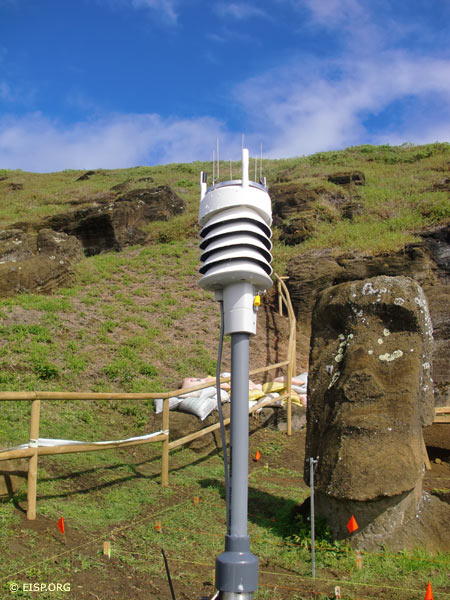
The Conservation Initiative is funded by the Archaeological Institute of America, and its intent is a scientific evaluation of the state of preservation, above and below ground, of the two statues described here (RR-001-156 and RR-001-157). In addition, the Conservation Initiative will monitor and collect scientific data on the discrete environmental contexts of the two statues. These data will be employed to determine the course of stone stabilization treatment to be embarked upon for each statue, and how that treatment may or may not be generalized to other statues.
Phase 1 Season 1
Easter Island Statue Project Conservation Initiative Preliminary Report March-April, 2010
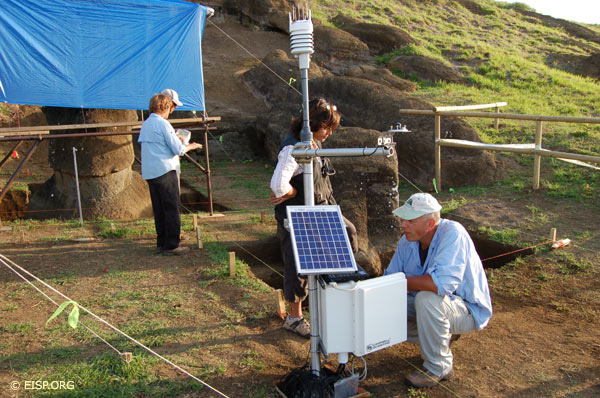
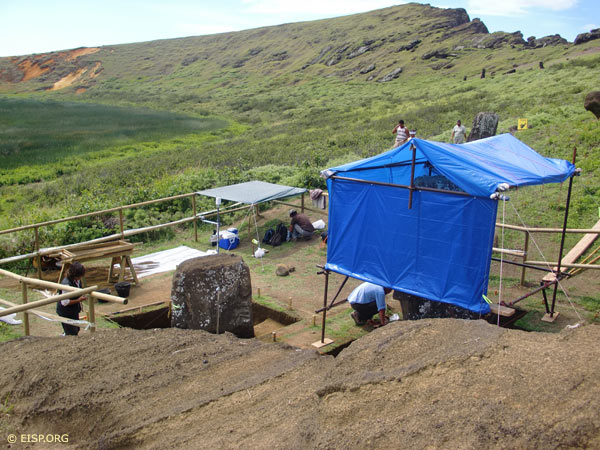
Introduction
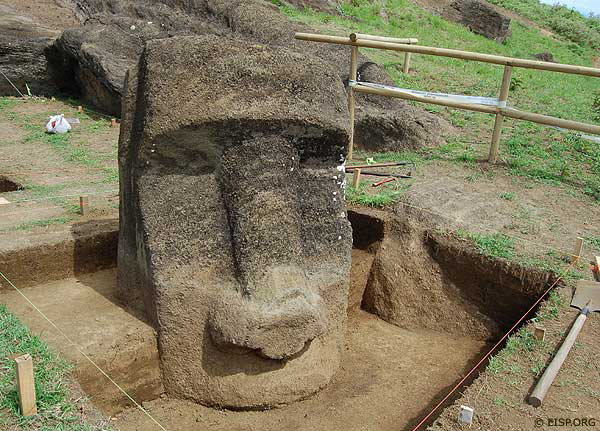
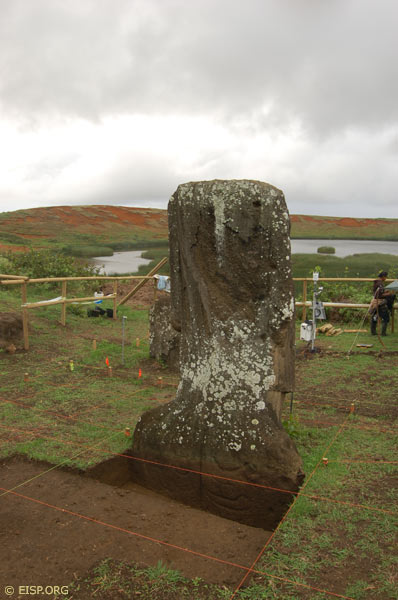
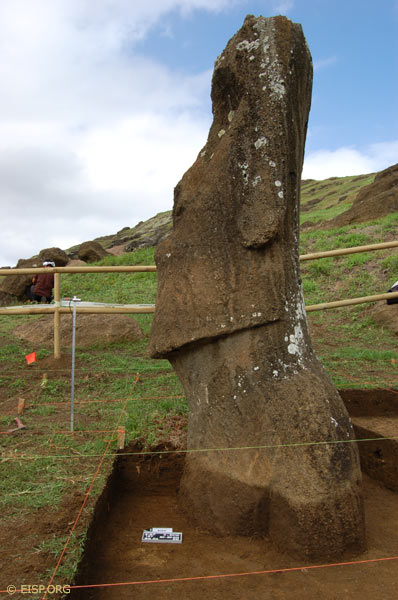
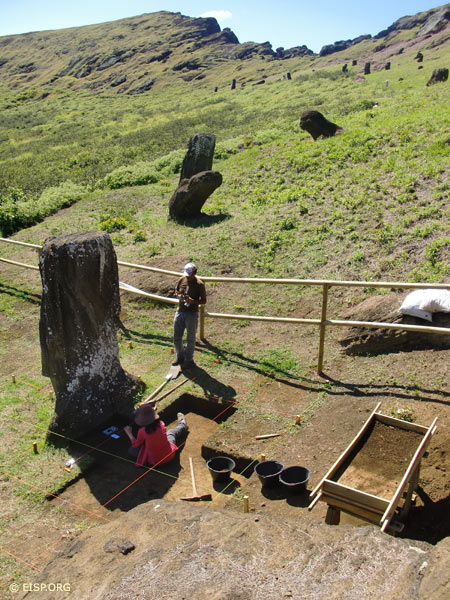
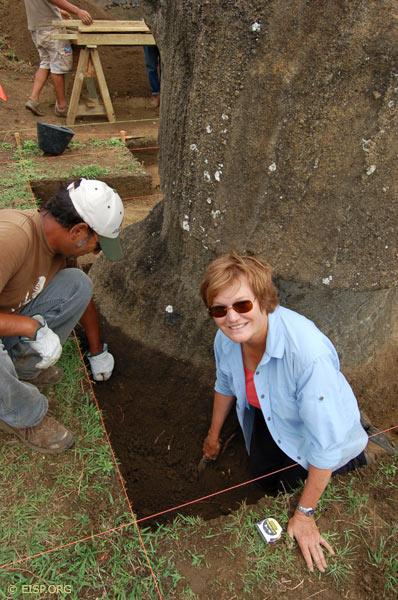
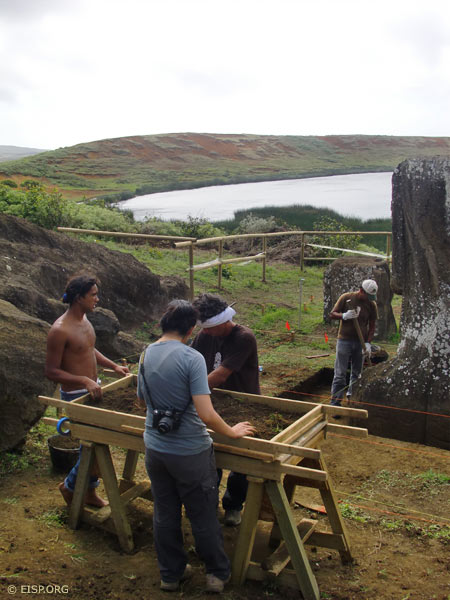
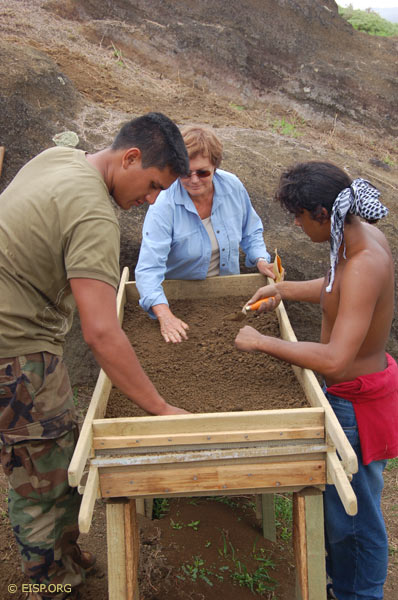
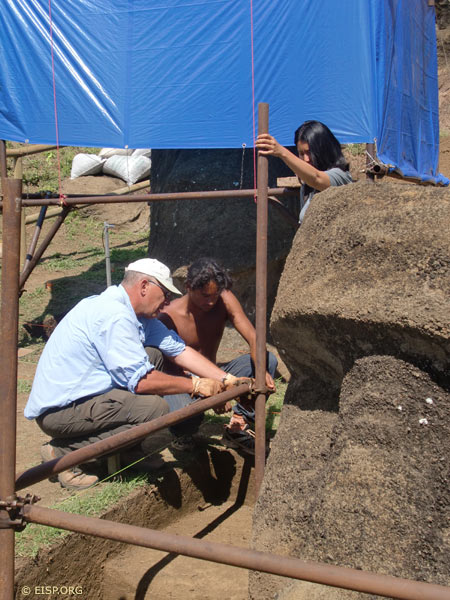
This project is the first controlled, scientific archaeological excavations ever undertaken in the interior of Rano Raraku Quarry. It is also the first stone conservation and preservation pilot program in Rano Raraku.
All but one of the 22 standing statues (moai) in Rano Raraku Quarry interior have been previously exposed through unscientific and undocumented digging. The Target Statues for this project (RR-001-156 and RR-001-157) have been dug or otherwise disturbed by the Mana Expedition (1914), the Franco-Belgian Expedition (1935), and the Norwegian Archaeological Expedition (1954-55).
The Easter Island Statue Project (EISP) has a 20 year history of archaeological survey on Easter Island (Rapa Nui), the objective of which is the creation of a full and complete, island-wide monolithic and portable statue inventory and the compilation of an historical image record for each statue. Prior to the selection of Quarry Two for the excavations described here, the EISP team completed a five year mapping foray in the interior of Rano Raraku, the volcanic quarry from which 95 percent of the extant monolithic sculpture were produced (Van Tilburg 1994; Van Tilburg, Arévalo Pakarati and Alice Hom 2008).
[Read More…]
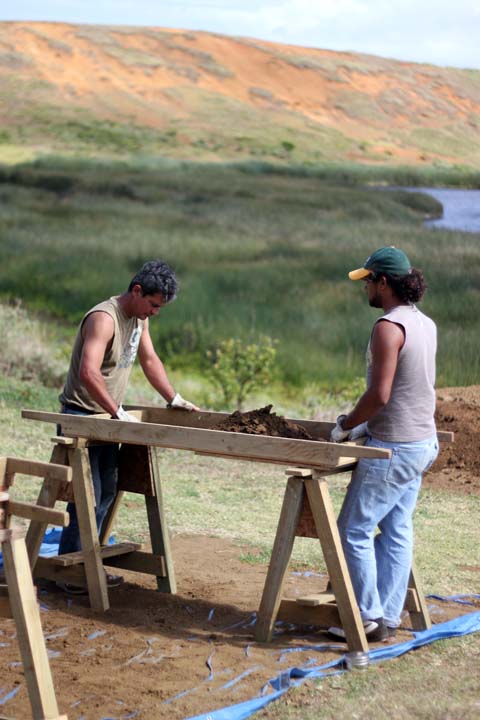
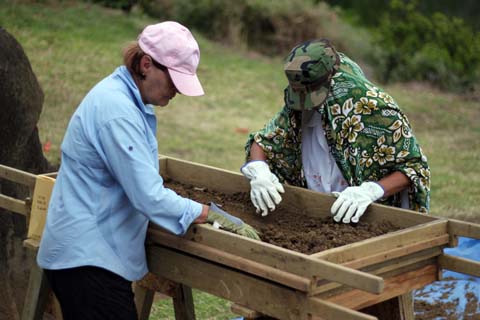
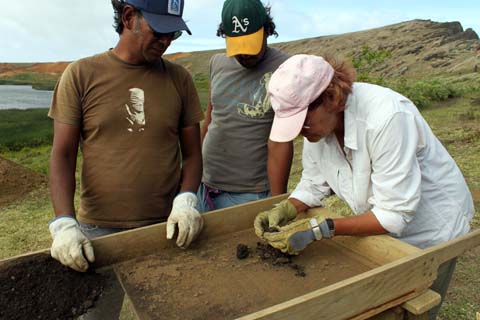
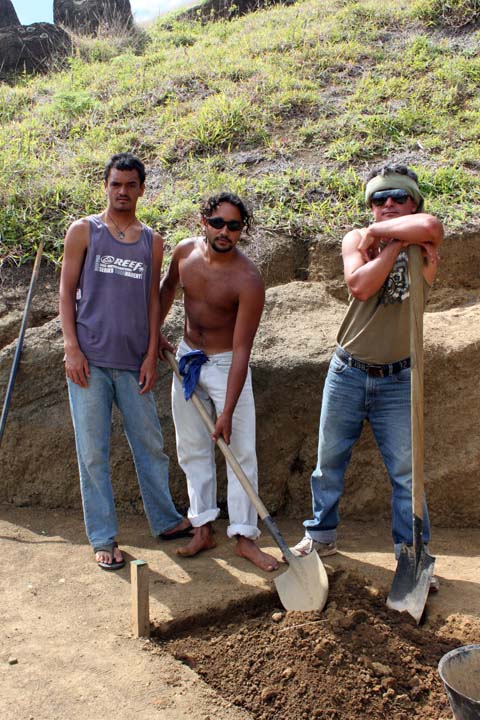
Meet our EISP Excavation Crew!
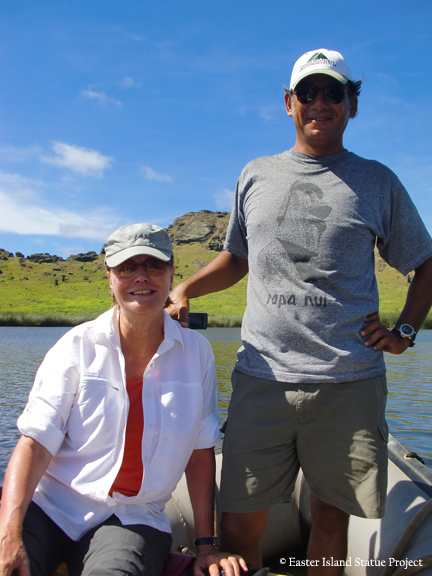
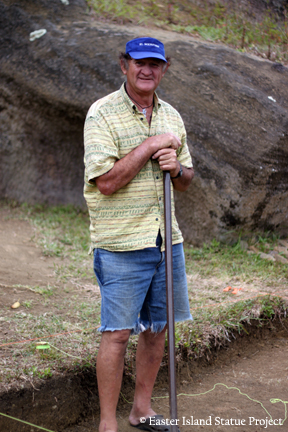
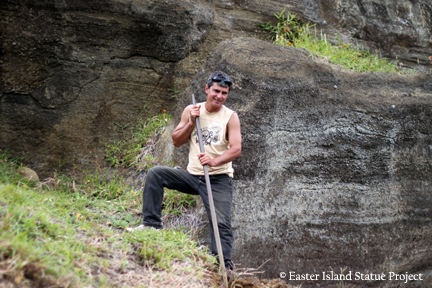
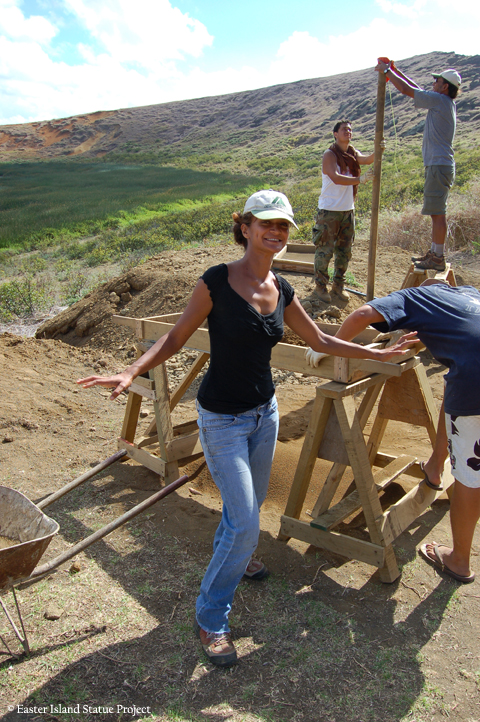
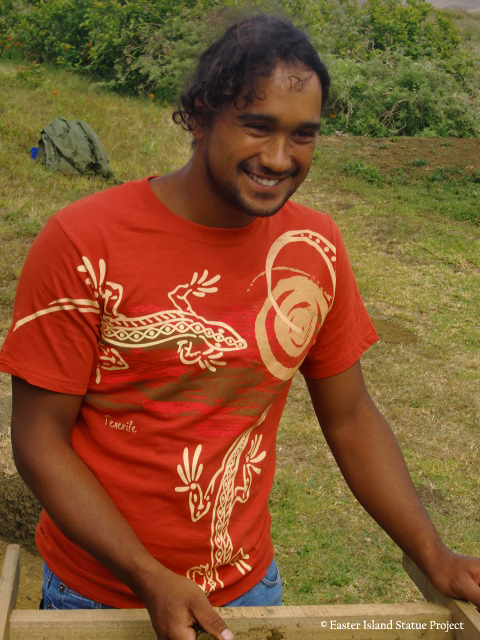
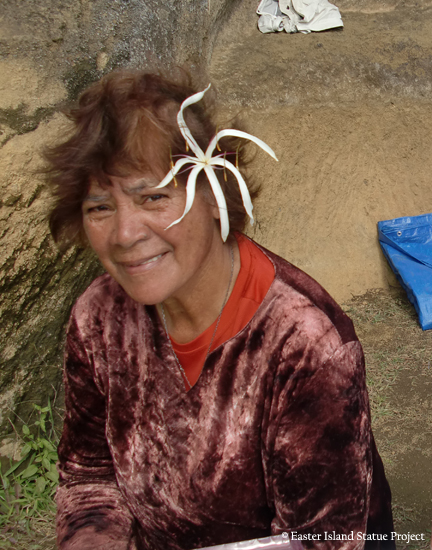
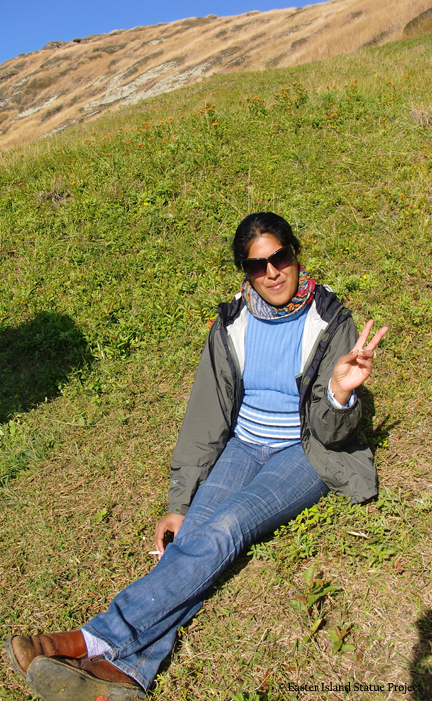
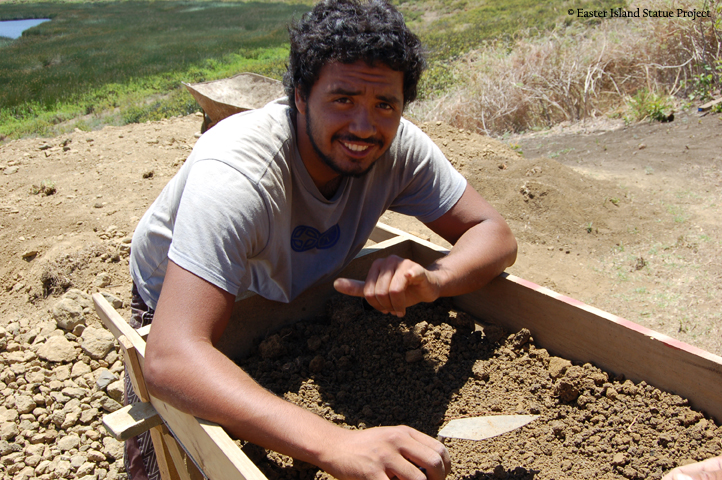
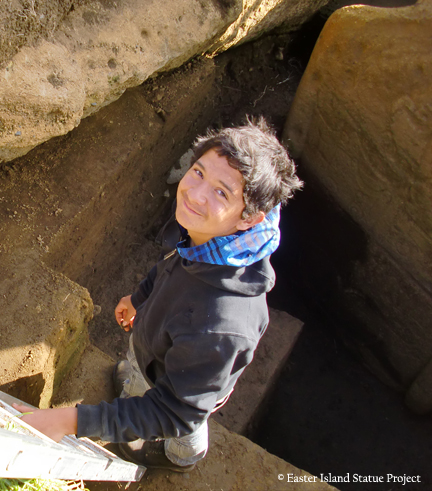
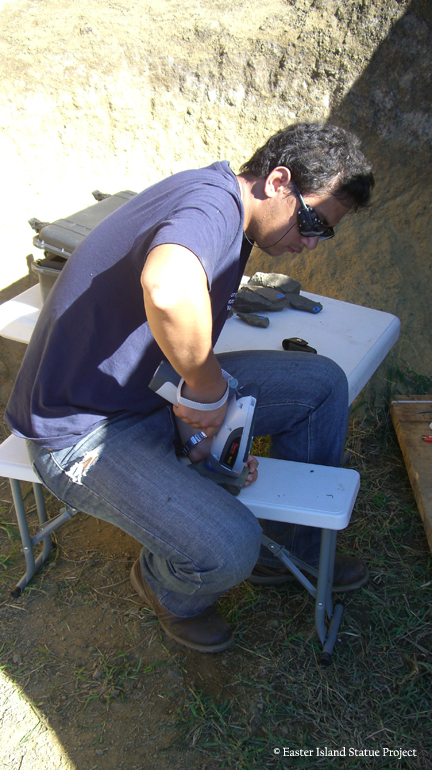
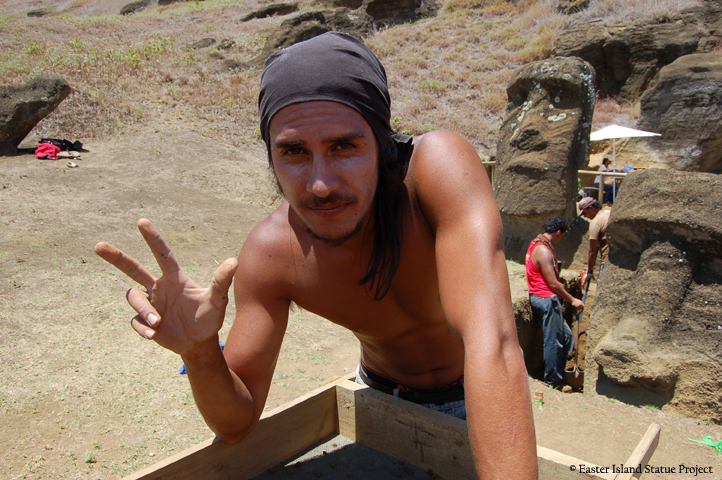
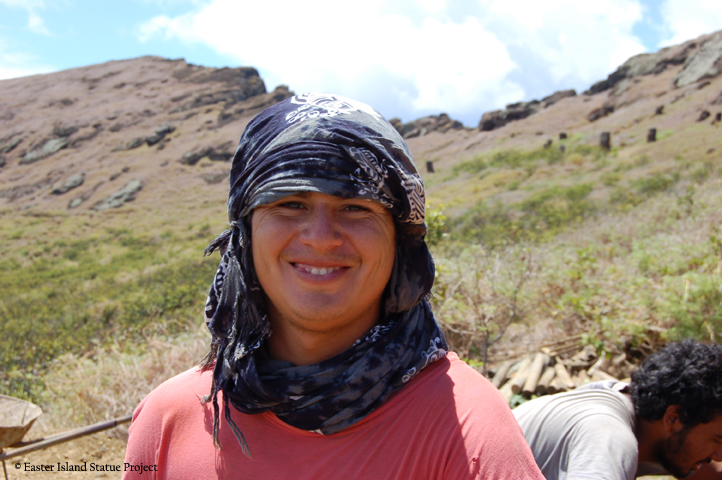
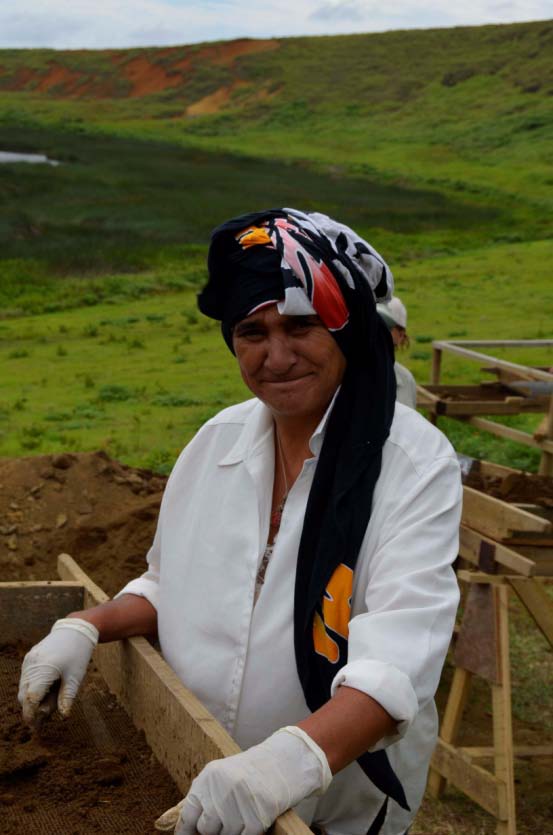
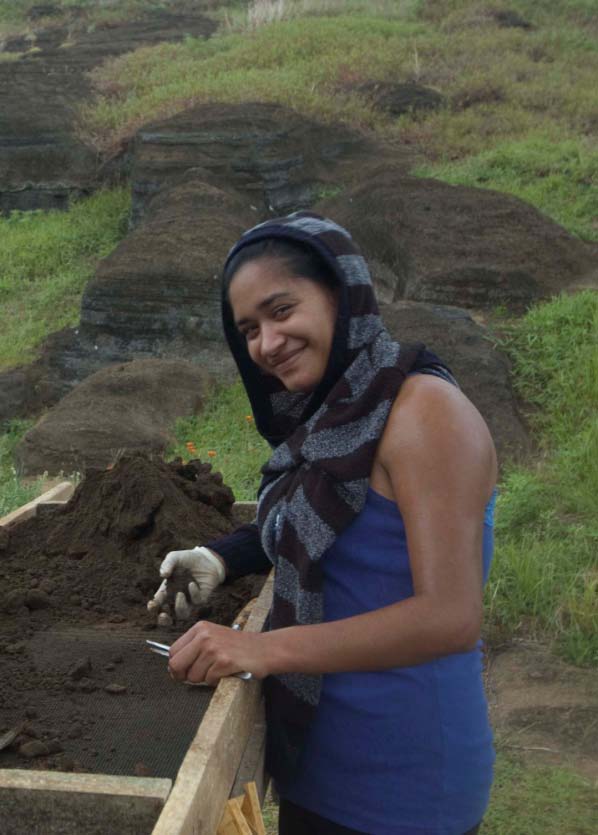
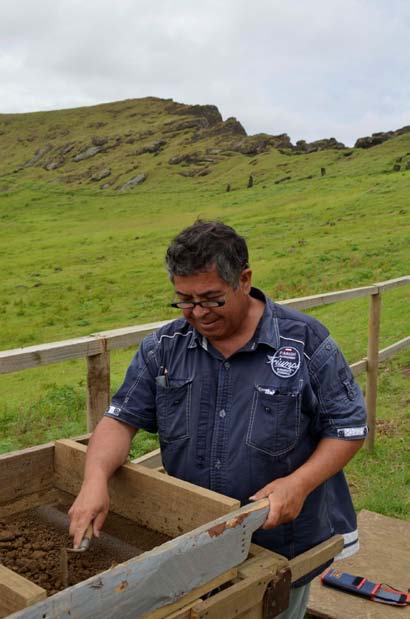
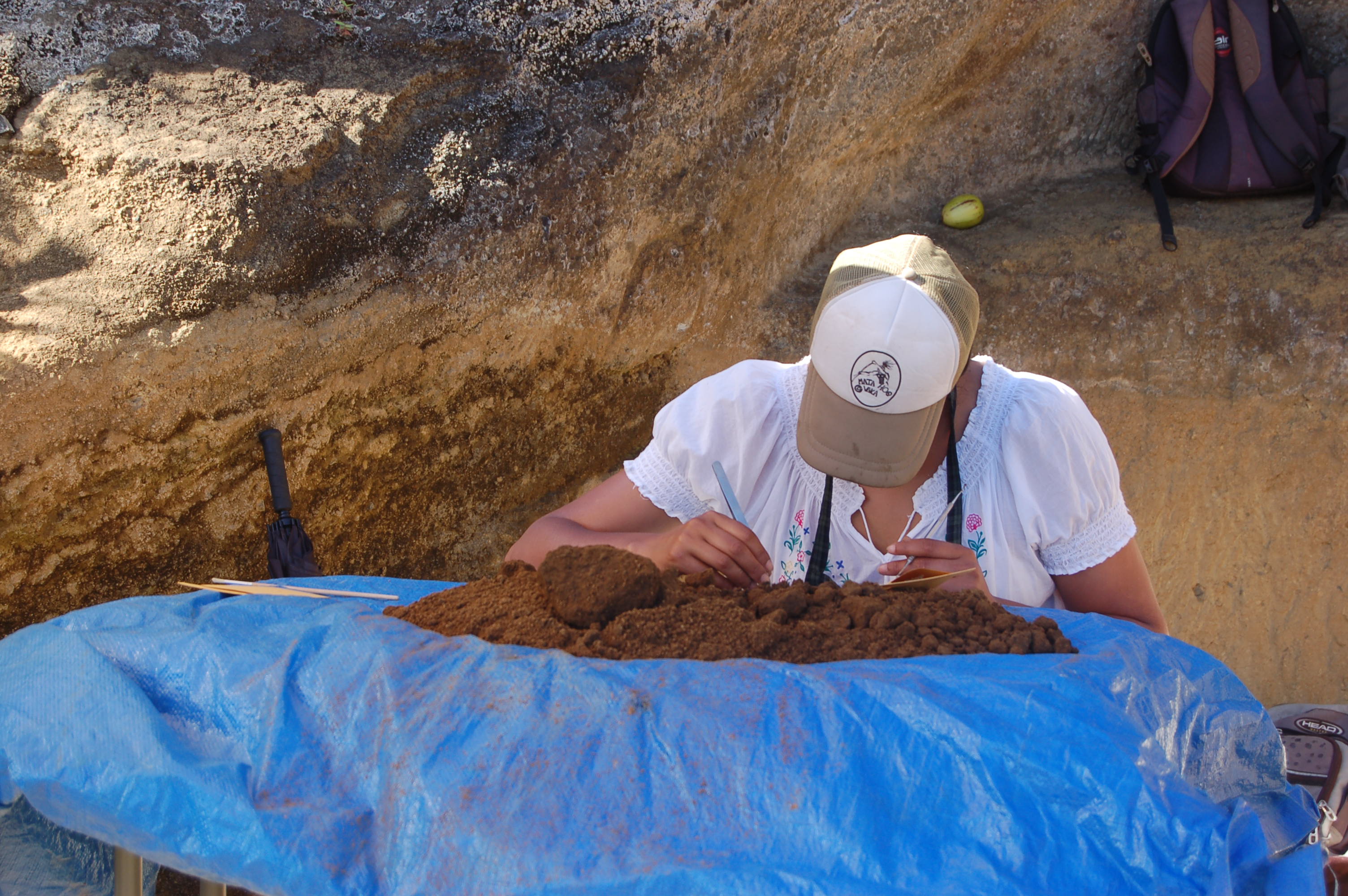
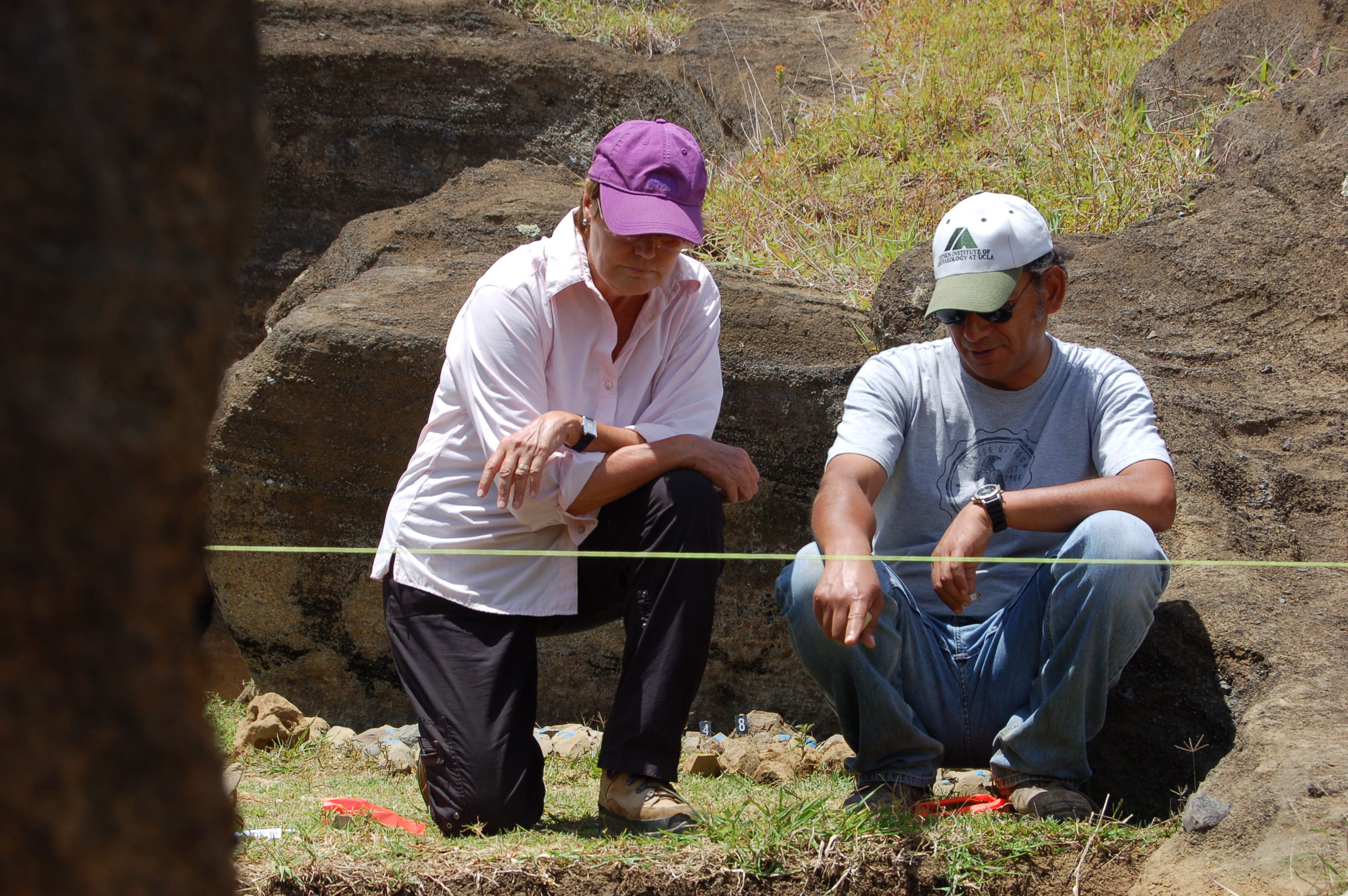
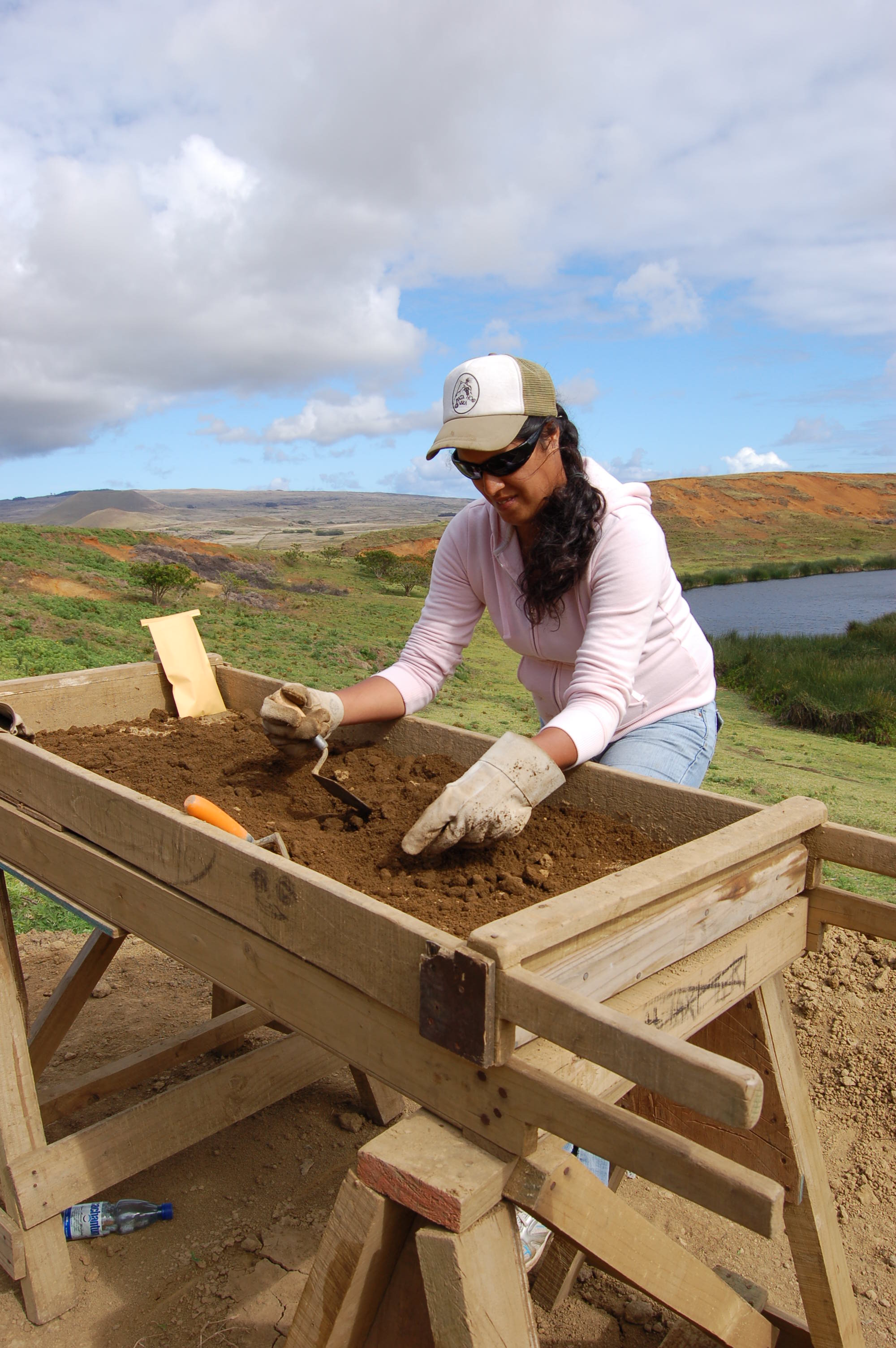
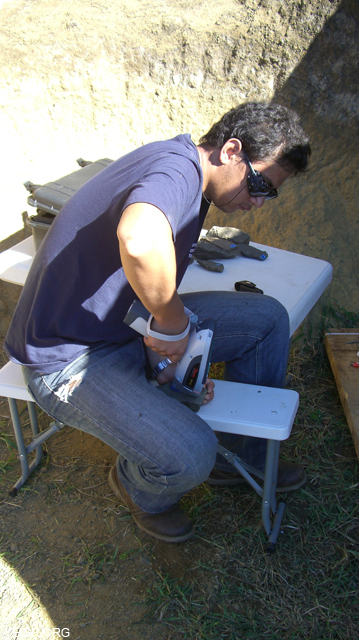
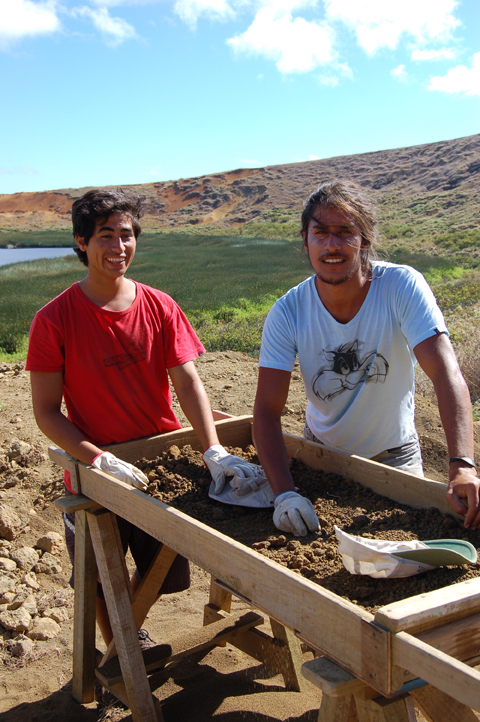
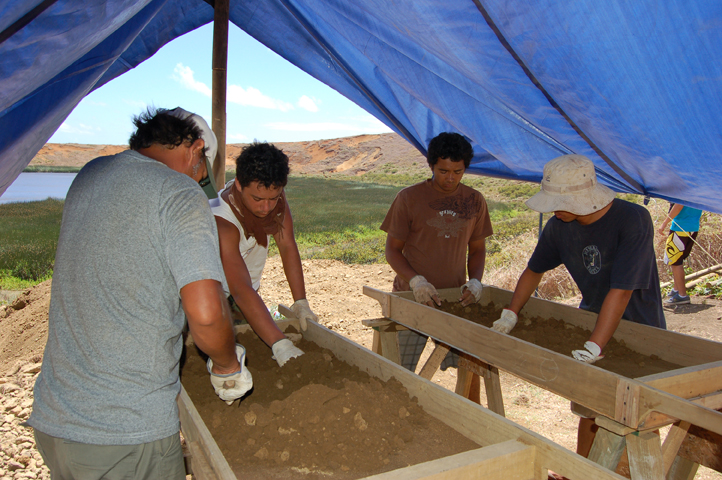
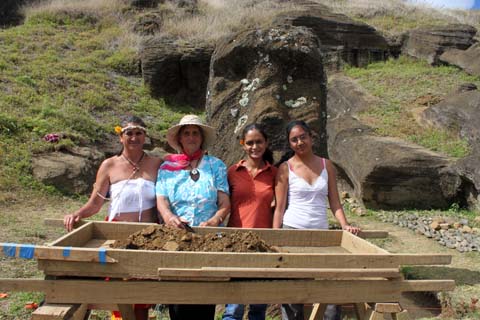
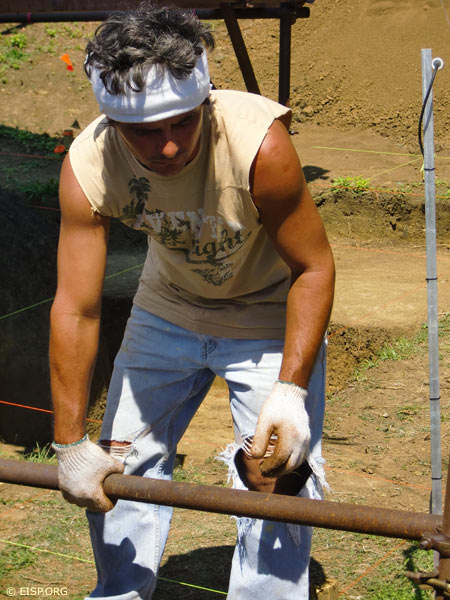
Jo Anne Van Tilburg and Cristián Arévalo Pakarati lead an all-Rapa Nui crew and core staff consisting of Dario Ika Paoa, excavator; Patricio Rodrigo Madariaga Paoa, excavator; Vaiheri Tuki Haoa, photographer; and Rosa Lucía Ika Paoaand Anastasia Ika Paoa, logistics and support.
We have been joined seasonally by Carlos Rapu Rapu, Benjamin Mihaore Pakarati González, Ana Pakarati Icka, Margarita Pakarati, and Melisanda Pakarati;
Rapa Nui students in archaeology and conservation, some of whom are from Universidad Internacional SEK, include Isaías Hey Gonzáles, Joaquin Soler Hotu, Rafael Paoa Rapu, Tiktehatu Astete Paoa and Felipé Rubio Munita.
Dr. Christian Fischer and Mónica Bahamondez Prieto are in charge of the conservation initiative of our AIA-funded project, with Paula Valenzuela and Tahira Edmunds on field data collection.
EISP staff who have worked on the excavation include Alice Hom (2010) and Kim Anh Hoang (2011).
Volunteers include Tokerau Pakarati Icka, Hotu Pakarati Icka, and Johannes Van Tilburg, FAIA. CONAF employees, especially Pablo Hito, have all been present or involved at one time or another.
Join Us in a Monumental Task
Save the Easter Island Statues
Dear Friends,
Through a methodical archaeological survey we have accomplished the digital mapping of Rano Raraku statue quarry, documented over one thousand statues throughout the entire island and created the world’s largest archaeological archive describing the statues.
Working with scientific colleagues at The Cotsen Institute of Archaeology at UCLA and with conservators from Chile’s Centro Nacional de Conservación y Restauración. We are excavating and conserving statues in Rano Raraku interior quarry. Knowledge gained there will allow preservation of other statues throughout the island.
In 2008, our work was rewarded with a grant from the Site Preservation Task Force of the Archaeological Institute of America (AIA; www.archaeological.org).
A wonderful AIA grant jumpstarted our conservation initiative. EISP has no endowment. Our only source of income is grants and U.S. tax deductible contributions.
Please join us in A Monumental Task, become a Friend of EISP!
—Jo Anne Van Tilburg
Conservation Report Season II
Environmental Monitoring and Conservation Mission
Dr. Christian Fischer and Ms. Monica Bahamondez P.
May 14-26, 2011
Introduction
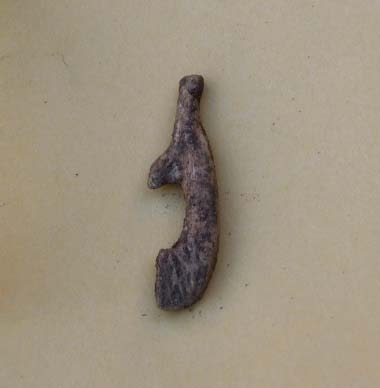
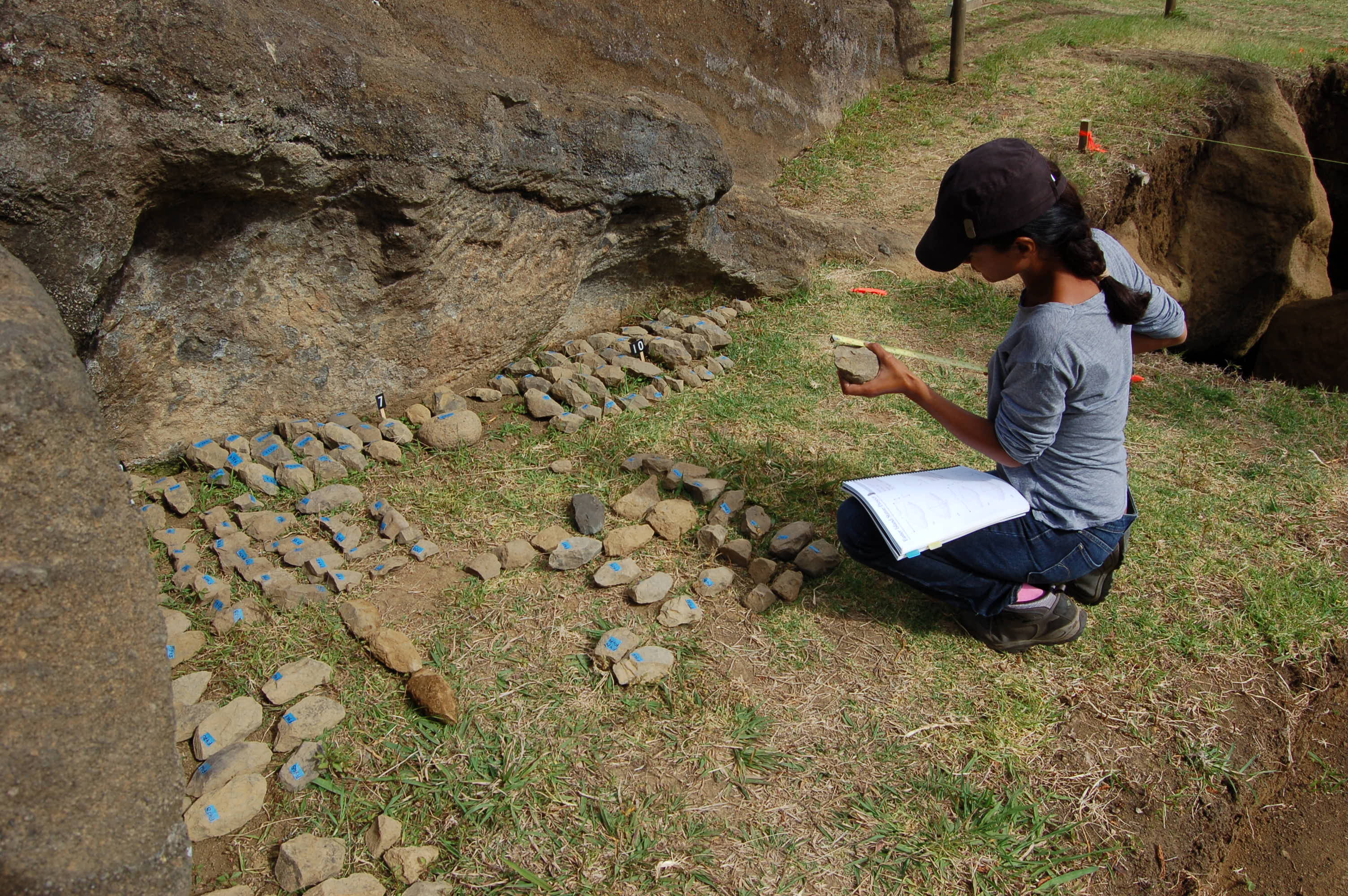
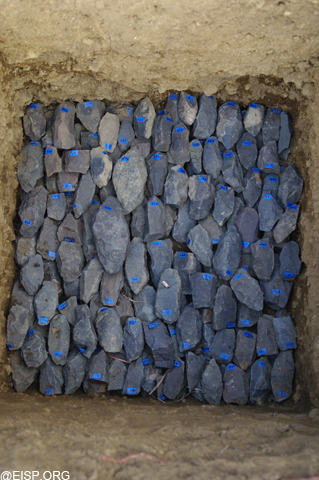
The main objectives of this mission, carried out with the assistance of Cristián Arévalo Pakarati, Rafael Paoa Rapu and Vaiheri Tuki Haoa, were firstly, to apply the protective treatment on statues RR-001-157 and RR-001-156 currently being excavated by EISP and secondly, to start the Toki Sourcing Project by analyzing the elemental composition of the ‘toki’ found during the excavation using a portable X-ray fluorescence spectrometer.
Conservation Report Season I
Environmental Monitoring and Conservation Mission
Dr. Christian Fischer and Ms. Monica Bahamondez P.
March 8-16, 2011
Introduction
The main objective of this mission, carried out with the assistance of Cristián Arévalo Pakarati, was to evaluate the status of the environmental monitoring equipment illegally removed in 2010 and to re-install it on site for a measurement campaign of seven months to November 2011. In addition, another objective was to complete the building of the fence on the site to ensure safety around both equipment and excavated areas and to avoid potential damage from cattle and horses. Finally, a few meetings in relation to the project were also organized with different people on the island.
AIA Conservation Project Reconnaissance
Field Work
In June, 2009, Christian Fischer, Research Associate of the Cotsen Institute of Archaeology, UCLA and Mónica Bahamondez P., Centro Nacional de Conservación y Restauración joined Jo Anne Van Tilburg and Cristián Arévalo Pakarati (of EISP) in the field on Rapa Nui. Our immediate goal was a fact-finding and reconnaissance field study that would acquaint our colleagues on the AIA Project with the island sites and objects that are target concerns of our upcoming conservation work.
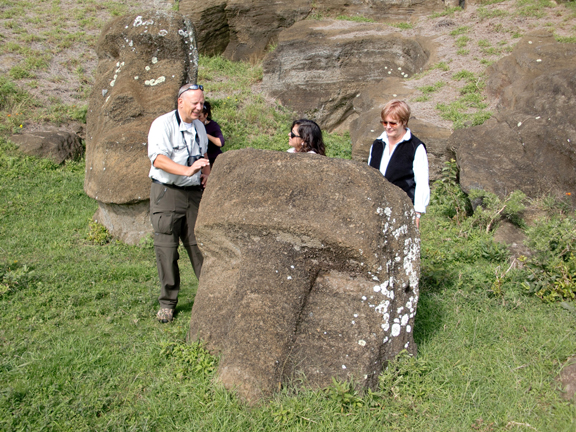
Christian Fischer, Mónica Bahamondez P. and Jo Anne Van Tilburg in the Rano Raraku quarry with statues 'Mama' and 'Papa.'
In the interior of Rano Raraku quarry, EISP has mapped and documented every statue in each of their various carving phases, as well as the independent histories of the individual quarries. Two statues, famously dubbed “Papa” and “Mama” by Katherine Pease Routledge, co-leader of the Mana Expedition to Easter Island, 1919, were the immediate focus of our attention. We studied specific issues of stone faulting and breakage, and planned a strategy for environmental monitoring, which will be carried out during 2009-2010. [Read More…]
Hoa Hakananai’a Laser Scan Project
September 2007
Background, Rationale and Goals
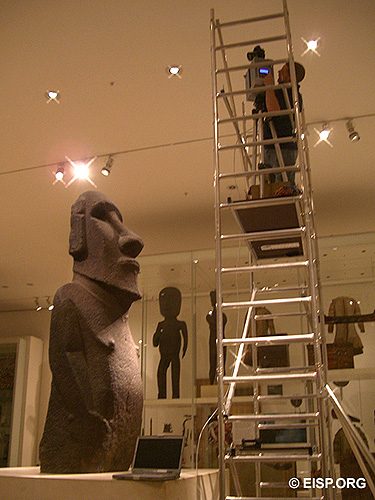
Laser scannning Hoa Hakananai’a at the British Museum. Photo by J. Van Tilburg.
To date, Van Tilburg and the Easter Island Statue Project (EISP) have inventoried 887 monolithic statues (moai) and compiled a metric database buttressed by 24,000 original and archived images. Some 35% of the known statues are located on or in direct relation to ceremonial sites called image ahu (Martinsson – Wallin 1994: Appendix 1 gives 164 image ahu; Van Tilburg 1986; Van Tilburg and Vargas C. 1998).
Rano Raraku, a volcanic crater on the island’s eastern plain, was the source of the sideromelane (basaltic) tuff from which 95% of the statues were carved. This source is irrefutable as there are 397 in situ statues, of which 141 in various stages of completion have recently been mapped by EISP in the interior quarries (Van Tilburg 2005; www.eisp.org). Much rarer statue lithologies are basalt (hawaiite lavas) from three named regions; trachyte and ‘red basaltic scoria’ or ‘red scoriaceous lava’ (also used as pukao or ‘topknots’ that were placed on the heads of about 75-100 statues).
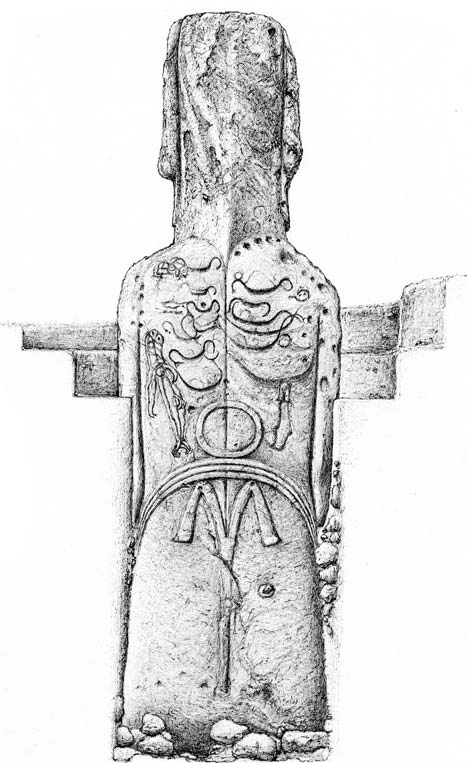
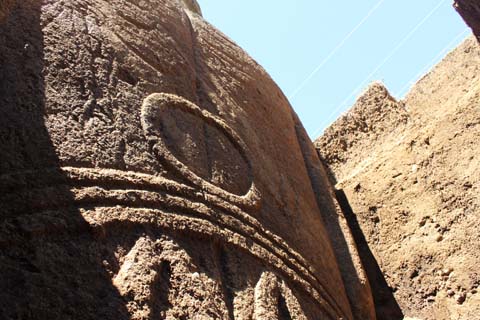
There are only 20 statues (portable and non-portable) now in the EISP database which were carved of basalt. Of these, 7 are in museum collections. The British Museum holds two basalt statues, both of which are of central and very great significance to furthering our understanding of Rapa Nui history. One of them (1869.10-5.1) is re-carved on its dorsal side with bas-relief and incised petroglyphs of great iconographic significance. This re-carving is unique in its style, detail, and expertise and quality of execution. Four other statues, including 1869.10-6.1 (Moai Hava), have incised petroglyphs of lesser distinction but within clearly defined, limited typological categories. Another 30 statues still in situ on the island have applied decorations of similar styles.
The AIA selects Easter Island as its second Site Preservation project
January 5, 2009
Efforts will protect and preserve Easter Island’s Rapa Nui Moai statues
Boston – The Archaeological Institute of America (AIA), North America’s oldest and largest organization devoted to the world of archaeology, has selected the monolithic sculptures (moai) of Easter Island (Rapa Nui), Chile, and national park as its second site preservation project. With a grant to the Easter Island Statue Project from the organization’s AIA Site Preservation Task Force, the Project will develop stone preservation techniques to arrest the rapid deterioration of these statues as a result of the fragile nature of their volcanic stone, climate change, and tourism. The Easter Island Statue Project is directed by UCLA archaeologist Jo Anne Van Tilburg and co-directed by Cristían Arévalo Pakarati.